AI infrastructure / Success case
From a $5M seed to a $100M debt facility for a sovereign AI company
How Waveup helped a European AI infrastructure company stand out in the most crowded corner of AI - and what we learned about what infrastructure investors actually underwrite.Client details are anonymised at the company’s request.
At a glance
Debt facility secured
$100M
Lender materials built around contracted cash flows, collateral and downside cases.
- SeedClosed
- Series AClosed
- DebtSecured
- Series BRaising
Seed round
$5M
Closed
Series A
$15M
Closed
Next round
Series B
Now raising
Engagement
24+months
Ongoing since seed
Client
Sovereign AI compute and data center company
- Italy
- Switzerland
Scope
- Investor narrative and decks for every round
- Group and site-level financial models
- Brand built from scratch
- Conference materials
- Debt-funder materials
- Sales decks
The challenge: being heard in the loudest room in tech
The company had real assets - a credible path to power, a founding team that could actually build, and an early commercial pipeline - but no story that made an investor lean in before slide five.
When we joined, the question wasn’t “is this a good company?” It was “why should anyone fund this data center rather than the other forty in their inbox?”
Read moreShow less
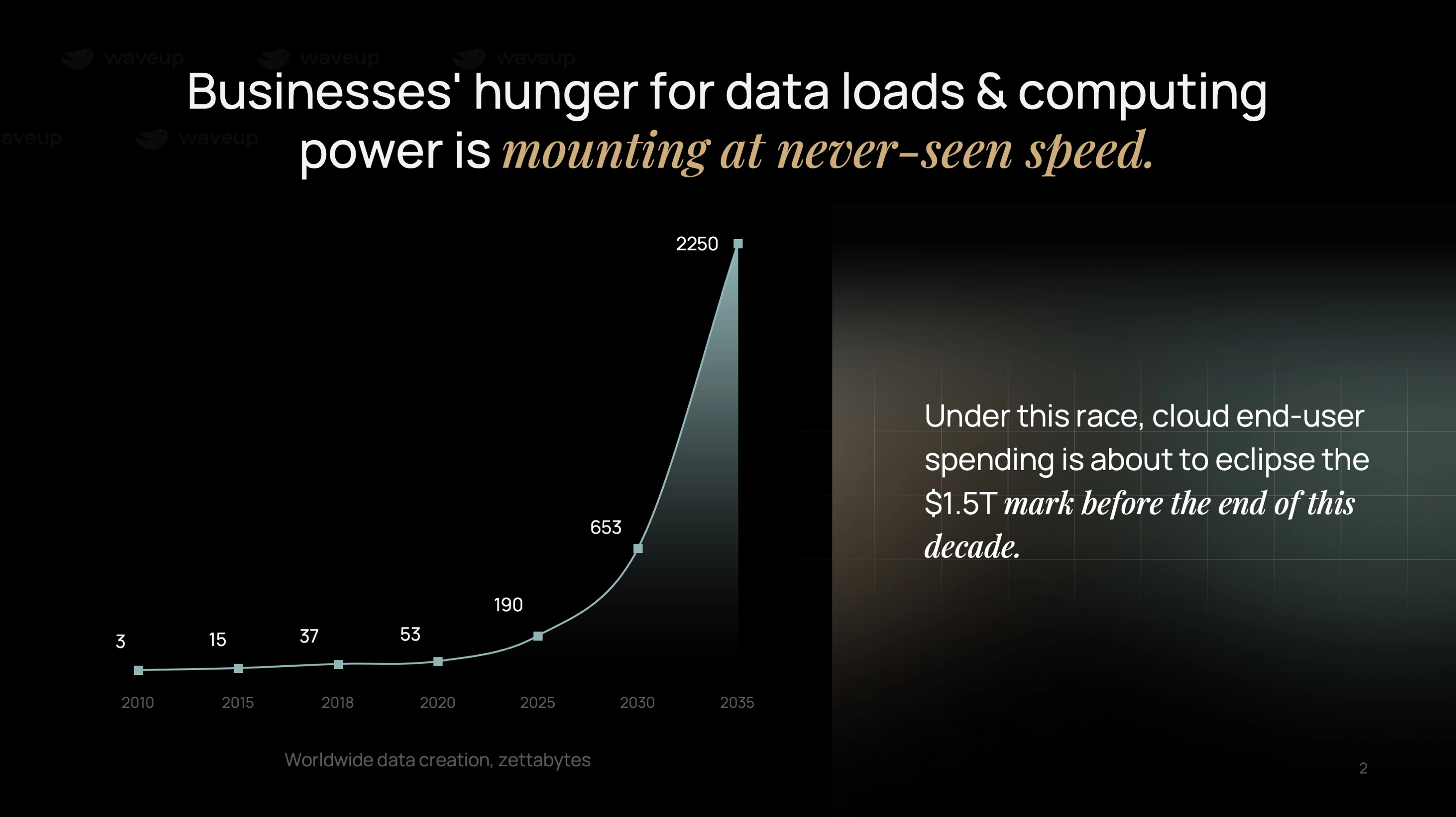
AI data centers are simultaneously the hottest and the most crowded category in venture. Combined hyperscaler capex is approaching roughly $700 billion in 2026, and every week brings another neocloud, another gigawatt campus, another “AI factory.”
For a seed-stage company, that is a problem, not a tailwind. Investors have heard the pitch a hundred times. Credit rating agencies have flagged overbuild and financing risk even as spending climbs. Their default read on any new entrant is “another GPU landlord who gets crushed on price by the hyperscalers or the well-funded neoclouds.”
The story: the sovereign compute race, and why Europe is behind
We anchored the narrative on a structural gap rather than on technology: Europe runs on infrastructure it doesn’t control, and the AI wave is making that dependence worse.
| Signal | Figure | Detail |
|---|---|---|
| Europe’s cloud market | 70% | held by Amazon, Microsoft and Google. European providers’ share fell from 29% in 2017 to 15% in 2022 and has stayed there since. |
| AI compute in the EU | 2 GW | five percent of the global total, rising only to 5.6% by 2031 on the current pipeline |
| AI data centre capacity announced to 2031 | ~21 vs ~255 GW | Europe against the United States |
| Planned AI compute per person | <40 vs ~750 W | per European against per American |
| Sovereign cloud IaaS spend in Europe | $6.9B → $23.1B | 2025 to 2027 (Gartner). Europe overtakes North America in sovereign cloud spending for the first time in 2027. |
| EU AI Gigafactories | up to €10B | in EU and national funding, expected to unlock at least €20 billion in private investment |
Local storage is not sovereignty
Data hosted by US-headquartered providers stays reachable under US law regardless of where the server sits. Microsoft France’s legal director conceded under oath that the company couldn’t guarantee French citizens’ data would never be transmitted to US authorities without French authorization.
Access can be switched off politically
The US House passed the Remote Access Security Act in January 2026, and in June 2026 an export-control directive ordered a frontier lab to cut non-American access to its two most capable models within days of their release.
The company as the sovereign backbone for European enterprise in the next wave of AI - compute that is governed locally, built faster than the incumbents, and already selling.
What infrastructure investors actually underwrite - and how we built the deck around it
Data center investors don’t buy the AI story. They buy five things, in roughly this order.
Time to power.
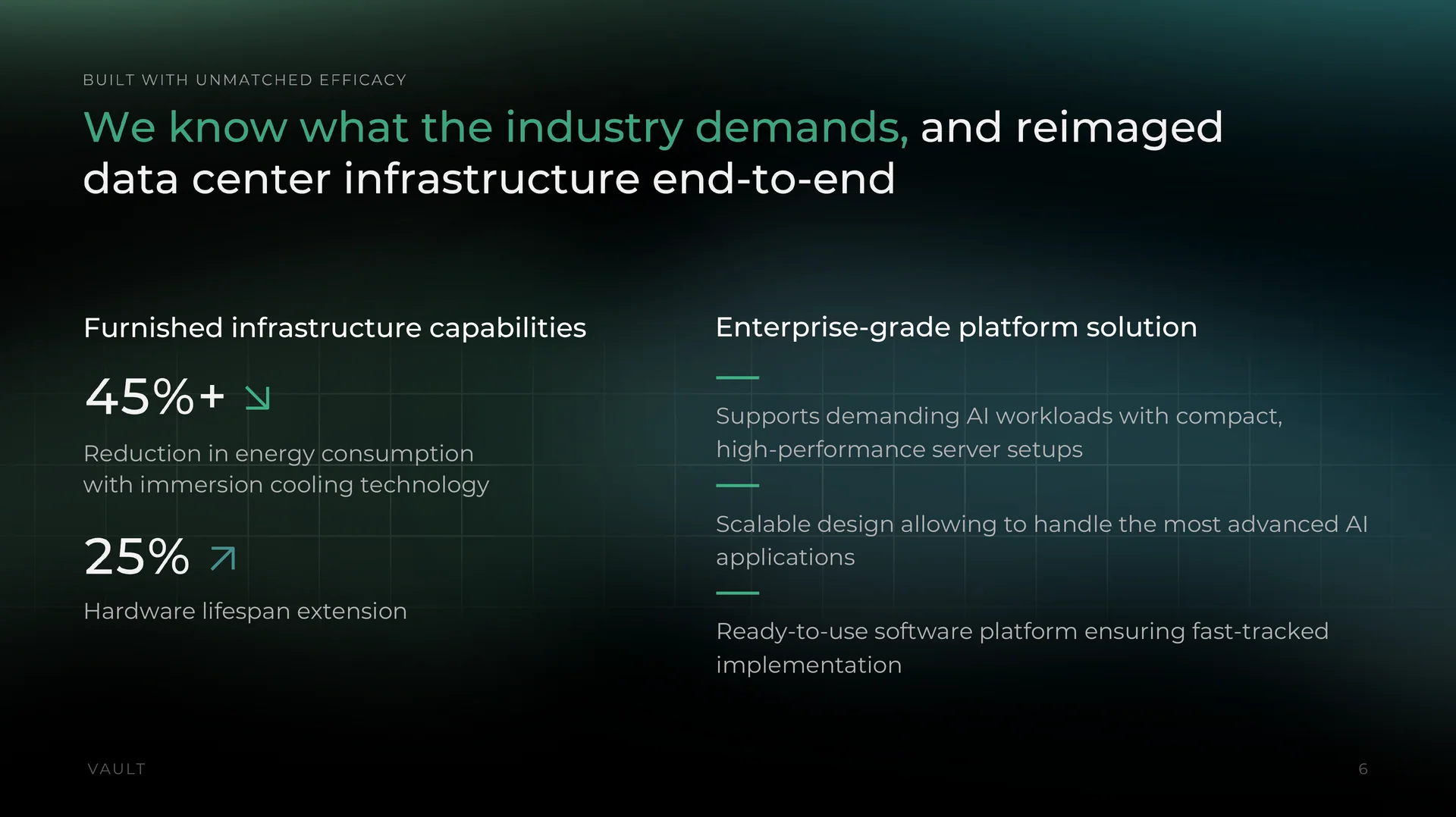
Power availability - not capital - is now the principal driver of investment decisions. “Will-serve” letters do not equal powered land; what matters is a contract for transmission capacity by a date certain. A site with signed tenant interest but no credible path to energization is not a data center investment - it is a land option with development risk. We made time-to-power the spine of the deck: grid connection status per site, dated milestones, and a clear argument for why the company reaches energised megawatts faster than anyone else in its markets.
Contracted demand.
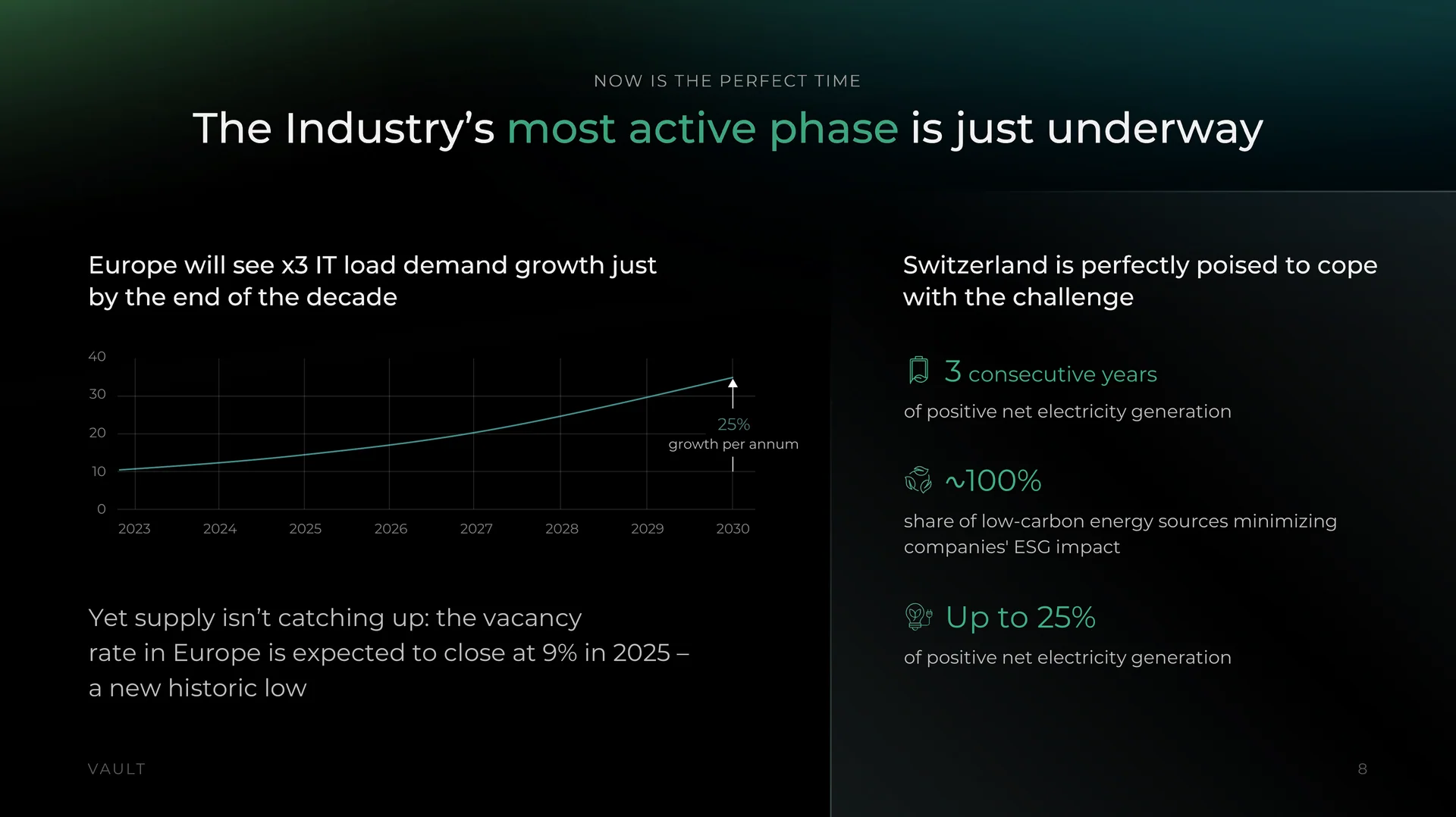
The entire neocloud capital structure can be summarized in one rule: offtake gets you infrastructure financing. Lenders underwrite the offtake counterparty far more than the hardware. We built the traction section to show a pipeline that compounds - counterparties, contract tenor, and how each signed megawatt pulls forward the next site. Not “we have interest,” but “here is who, for how long, and what it funds.”
Site-level economics.
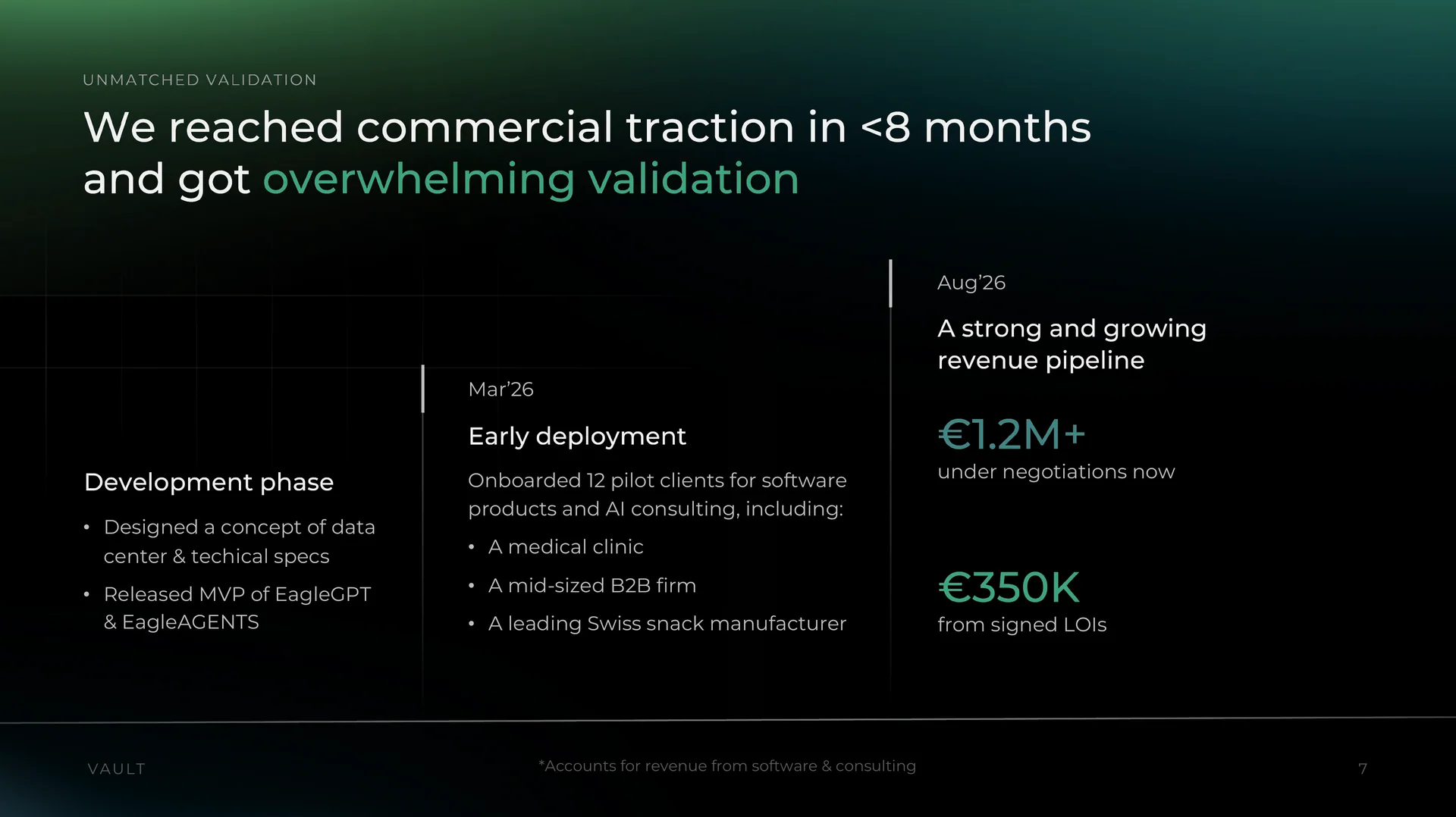
AI has raised underwriting standards: investors must now assess rack density, cooling requirements, customer credit quality, equipment cycles, and power intensity. Each site - Italy, Switzerland - got its own model: power price, capex per megawatt, ramp, utilisation, rolled up into the group model. It turned “trust us” into “here’s the sensitivity table.”
A capital structure that matches the asset.
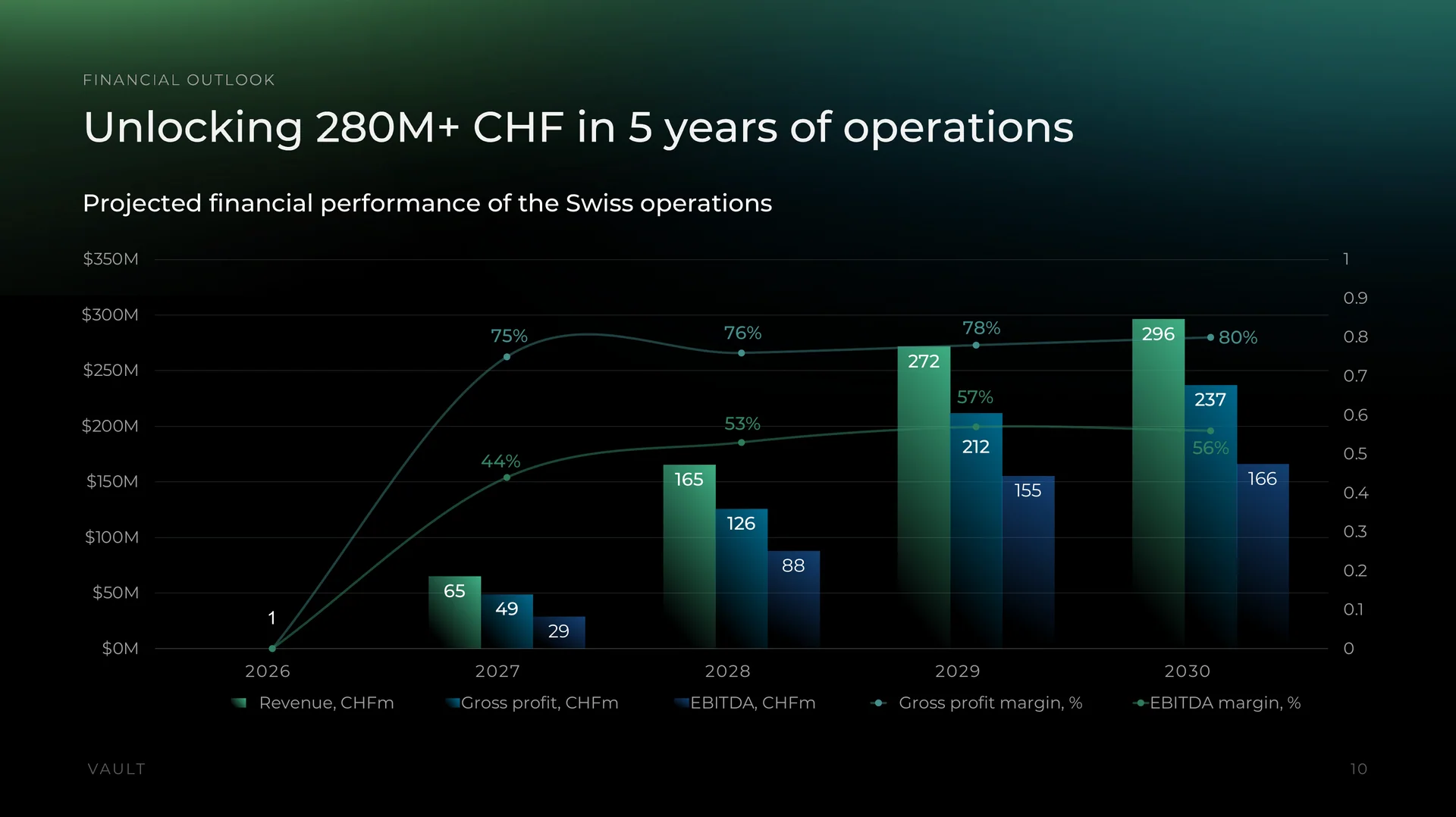
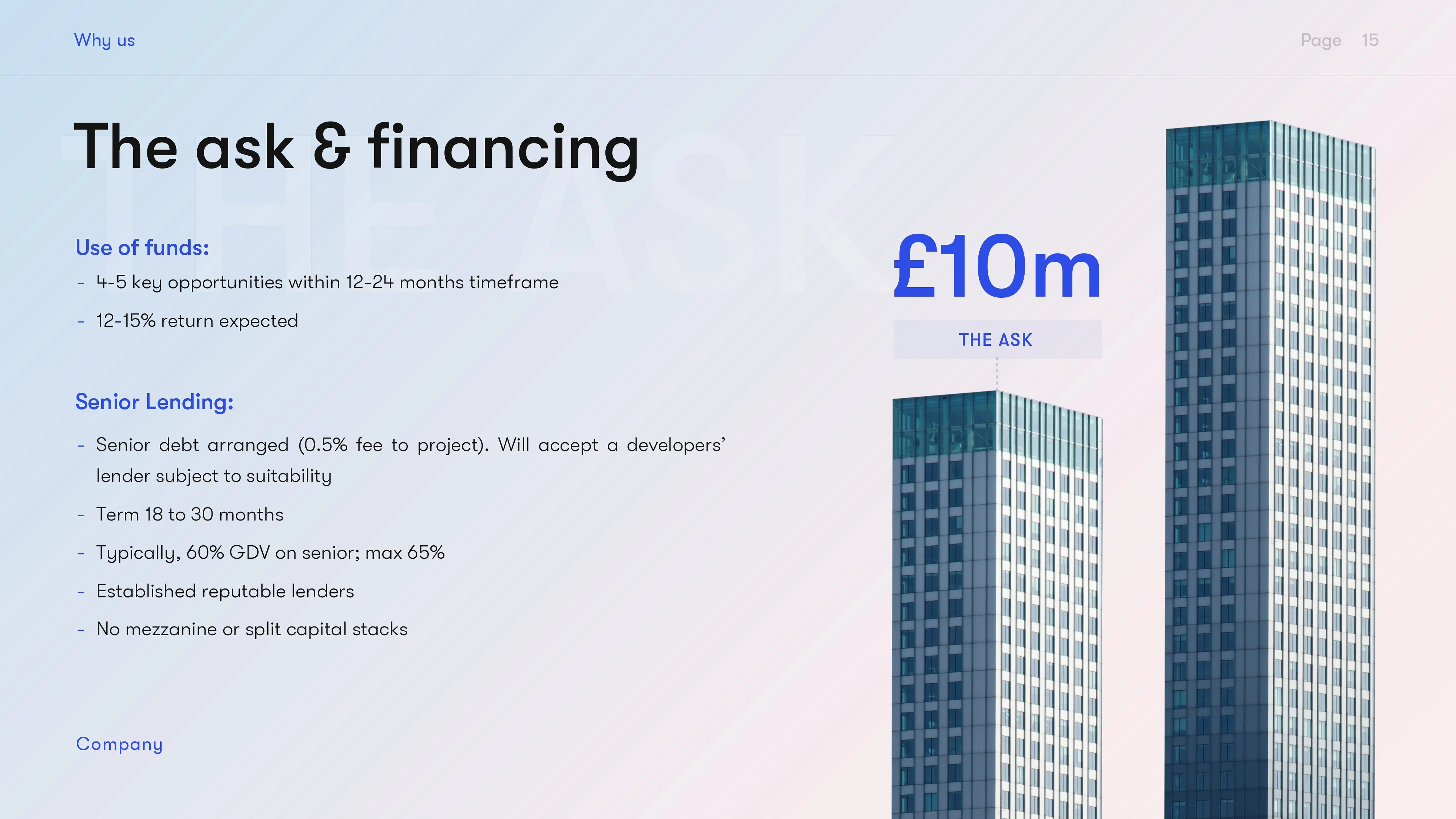
Equity for the platform and the pipeline; debt for the sites and the fleet. In GPU-backed raises the chips and their contracts are sold into a bankruptcy-remote special-purpose entity so that if the operating company fails, the collateral is still there and still reachable. Showing the debt path from the seed deck onward made the equity ask smaller and the return story cleaner - and it laid the groundwork for the $100M facility that followed.
Honesty about the asset.
Rental rates for H100-class capacity fell from roughly $7 to $10 per hour in early 2024 to $2 to $4 by late 2025. A deck that pretends GPUs don’t depreciate gets binned; one that models refresh cycles and shows the site economics still work is the one that gets the second meeting.
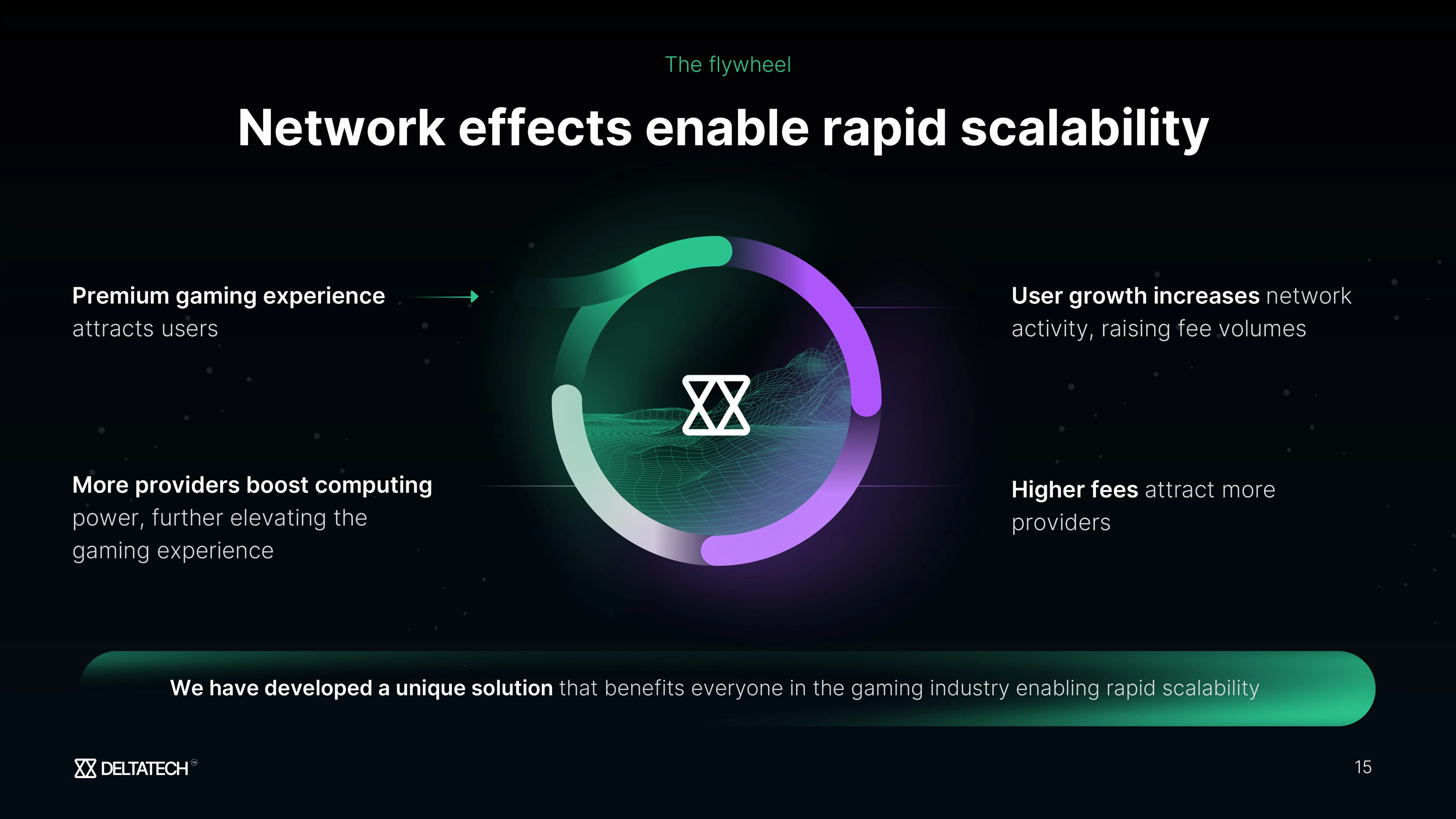
Sovereignty is a moat only when paired with demand and speed. Private capital is not the crucial constraint on Europe’s AI compute build-out; speed-to-operation and grid access are more significant limitations. The companies that win the sovereign race are the ones that can build, not the ones that can lobby.
Beyond the deck: 24 months of full-stack support
A single raise is a project. Two equity rounds plus a debt facility is a relationship - and the materials had to grow with the company.
Investor narrative
Evolved round by round
- SeedWhy this, why now
- Series AProof the model works, site by site
- Series BCapital efficiency at scale
Financial modelling
One group model plus a model for each site
Used by equity investors, lenders and management
Debt-funder materials
Same company, opposite lens
- Downside cases
- Coverage ratios
- Contracted cash flows
- Collateral
- Ring-fencing
Brand
Built from scratch
Infrastructure is a trust business. Enterprise buyers, governments and lenders all judge the book by its cover.
Conference materials
Stage time into pipeline
Designed to turn time on stage into commercial conversations, not just awareness.
Sales decks
Sovereignty, reframed for buyers
Their compliance exposure, their latency, their exit risk from foreign clouds.
Results
- $5M seed closed
- $15M Series A closed
- $100M debt facility secured
- Series B now raising
- One narrative, four audiences - equity, debt, customers, conference stages - over 24 months
The investor deck










 $4Mpre-seed
$4M pre-seed round for a prospecting automation platform
$40M valuation3 term sheetsDeck in 7 daysRead the story $6.3MSeries A
Series A fundraising
Read the story 5xinbound in the first month
2-week launch for an AI automation startup
Shipped in 2 weeksRead the story 30 dayskickoff to launch
30-day launch for an AI content firewall
Read the storyRaising for AI infrastructure?
Waveup builds the narrative, the numbers and the materials - from seed to debt facility.