Real estate / Success case
$25M property management roll-up: investment case and financial model
A US coliving operator planned to grow by buying dozens of small property management companies. We rebuilt the case and the model for the investors and lenders financing the roll-up.
At a glance
Roll-up financing
$25M
Equity and term debt for the first wave of acquisitions, in progress.
- Case rebuiltFor investors and lenders
- Model builtDeal by deal
- First waveFinancing in progress
- ~80 companiesOver five years
The plan
About 80 companies, six waves
Over five years, adding 30,000+ homes
Financing
In progress
On the rebuilt case and model
Client
US coliving operator
- Property management
- Roll-up
Scope
- Investment case
- Financial model
- Continuous support
The challenge: models only an operator could read
The models
Built by operators, for operators: building-level detail, staffing and costs, and nothing showing what an acquisition costs, adds or returns.
The vision
A plan to buy dozens of companies with no numbers attached. Investors could see the ambition but not the return.
The mess
Too much material and too little structure. The case was in there somewhere, but investors don’t dig.
The story: buy small, at a fraction of what large managers are worth
Before: an operator with a real track record of taking over portfolios and running them well, explained through operating spreadsheets.
After: a roll-up of owner-run managers that sell for under one times revenue, in a market where large managers are valued at 8 to 13 times EBITDA.
- The operator todaySeveral portfolios taken over and run on one platform.
- First wave: $25M of equity and debtAbout a dozen companies and 18,000 homes.
- Six waves over five yearsAround 80 companies, adding more than 30,000 homes, earning fees with no fixed rent.
- By 2031Revenue up about tenfold to over $70M, EBITDA margins past 40%, debt repaid from cash.
What we learned: why roll-ups struggle to get financed
Investors have seen this sector burn cash, and they know where roll-ups go wrong.
The sector has burned cash
Coliving operators that scaled fast on long fixed-rent leases ran out of money when revenue dipped.
Operating detail isn’t an answer
A building-level model shows how to run a property. A lender needs what each deal returns.
Integration is where roll-ups die
Leadership, systems and culture that never merge wipe out the value the deal was meant to create.
Overpaying kills the profit
Bidding wars close the gap between the price paid and what a company is worth inside the group.
Acquisition-only growth gets discounted
Buyers pay less for a business stitched together from deals than for one that also grows on its own.
What gets financed
The case for a roll-up starts with the market and the price gap.
- ~12,000 companies manage US apartment buildings, and beyond a few large players the market is fragmented
- 0.8x median revenue multiple for small property management businesses sold in 2021-2025
- 8-13x EBITDA multiples for large multifamily and homeowners’ association managers
- 72.9% of US private equity buyouts in 2025 were add-ons, so investors know the playbook
Add fee income with no fixed rent attached, integration at a pace the team can deliver, and organic growth alongside the deals.
What we did: one case, one model, over several weeks
We worked alongside the team as the case was rebuilt.
Investment case
The fragmented market, the price gap, why this operator, and what the financing buys.
Acquisition plan
Around 80 companies in six waves, each with its homes, fees, price, closing month and integration budget.
Deal terms
A quarter of each price paid over two years, a tenth for integration, one in ten homes assumed lost.
Operating engine
Occupancy, rents, churn, staffing and costs as the base, with monthly P&L, cash flow and balance sheet on top.
Financing structure
$25M of equity and a term loan. Debt peaks near 1x EBITDA, falls to 0.2x, with interest covered 4x+.
Valuation and exit
A discounted cash flow and a multiples view against listed peers, with an exit case at year five.
Results
- ~80 acquisitions planned, adding more than 30,000 homes
- ~10x revenue growth to over $70M by 2031, with margins above 40%
- In progress financing for the first wave, on the rebuilt case and model
- One model for both audiences: equity investors see the exit case, lenders see leverage and interest cover year by year








 $149Mraised

A $149M raise for a pioneering mixed-use real estate development
Read the story $100Msecured

$100M multifamily real estate fund raise
Read the story Class Aoffice acquisition, capital secured
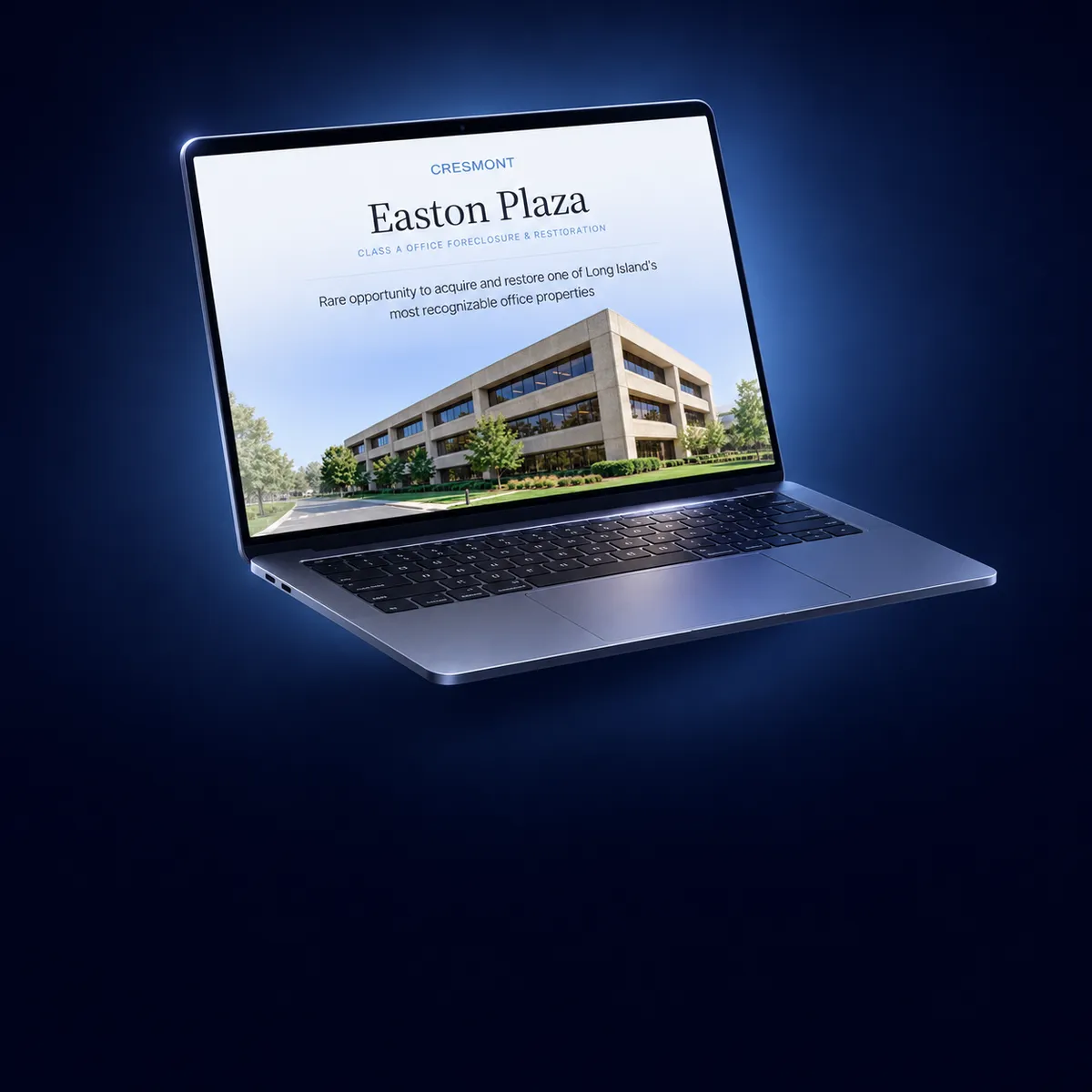
Pitchbook for a Class A office acquisition
Read the story $6Mseed

$6M seed round financial model for AI AdTech startup
Read the storyGrowing by acquisition, with models only an operator can read?
We build the investment case that gets the roll-up financed.

