Live entertainment / Success case
Building the £3M debt deck for a live entertainment company
Narrative, deck and design. A sold-out debut run turned into a lender presentation for a UK and European rollout.Client details are anonymised at the company’s request.
At a glance
Debt raise, now in market
£3M
A lender presentation for a 2027 UK and European rollout.
- London debutSold out
- Lender deckBuilt
- £3M debtIn market
- UK and Europe2027
Debut season
£2.6M revenue in a six-week run
£2.3M banked before opening night
The raise
Debt for the 2027 UK and European rollout
Now in market
Client
Premium live entertainment format combining sport and fine dining, debut London season summer 2026
- Live entertainment
- London
Scope
- Narrative
- Business model and economics
- Deck
- Design
The challenge: one season, and a debt ask
A sold-out debut season, and a lender audience that prices risk first.
The business. One season of trading, no venue and no recurring contracts. To a lender, a show can flop, and there’s nothing to repossess.
The ask. Debt, from a company whose only history was a launch year with £1.4M of pre-opening investment on the books.
The story: from a hit show to a business lenders can fund
The deck had to turn a hit show into a repayment case a credit committee could sign.
Before
A show that sold out and wants to tour.
After
A cash-generative business with one proven unit, a launch cost that doesn’t repeat, a dated rollout, and more than one way to grow.
Guests pay at booking, so cash arrives before cost: £2.3M of the season’s receipts were banked before opening night.
What we learned: why entertainment companies struggle to borrow
Entertainment companies struggle to borrow for three reasons.
Lenders price the flop
Costs go out long before ticket income arrives, and one run is only one data point.
Nothing to lend against
Lenders expect collateral. A touring format with a rented venue has to find security elsewhere.
The launch year hides the economics
A P&L carrying £800k+ of launch marketing hides what a repeat season earns.
What lenders read, and how the deck shows it
Three things decide a lending case. The deck puts each one where a credit reader looks first.
Cash before cost.
Lenders look at forward bookings. The debut run, sold-out shows and tickets sold come first.
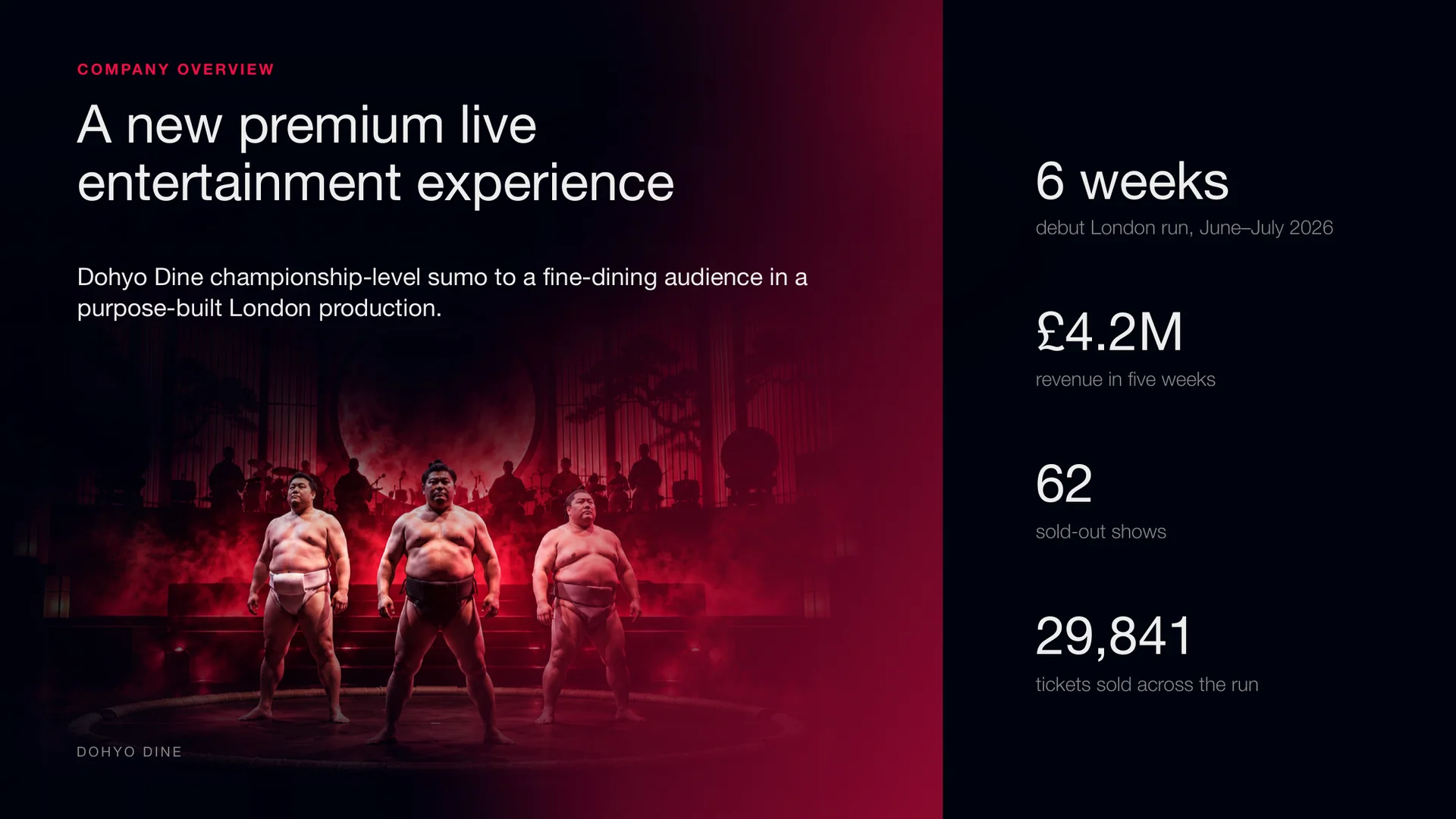
Demand that travels.
The format next to immersive shows with multi-year London residencies and multi-million-ticket tours.
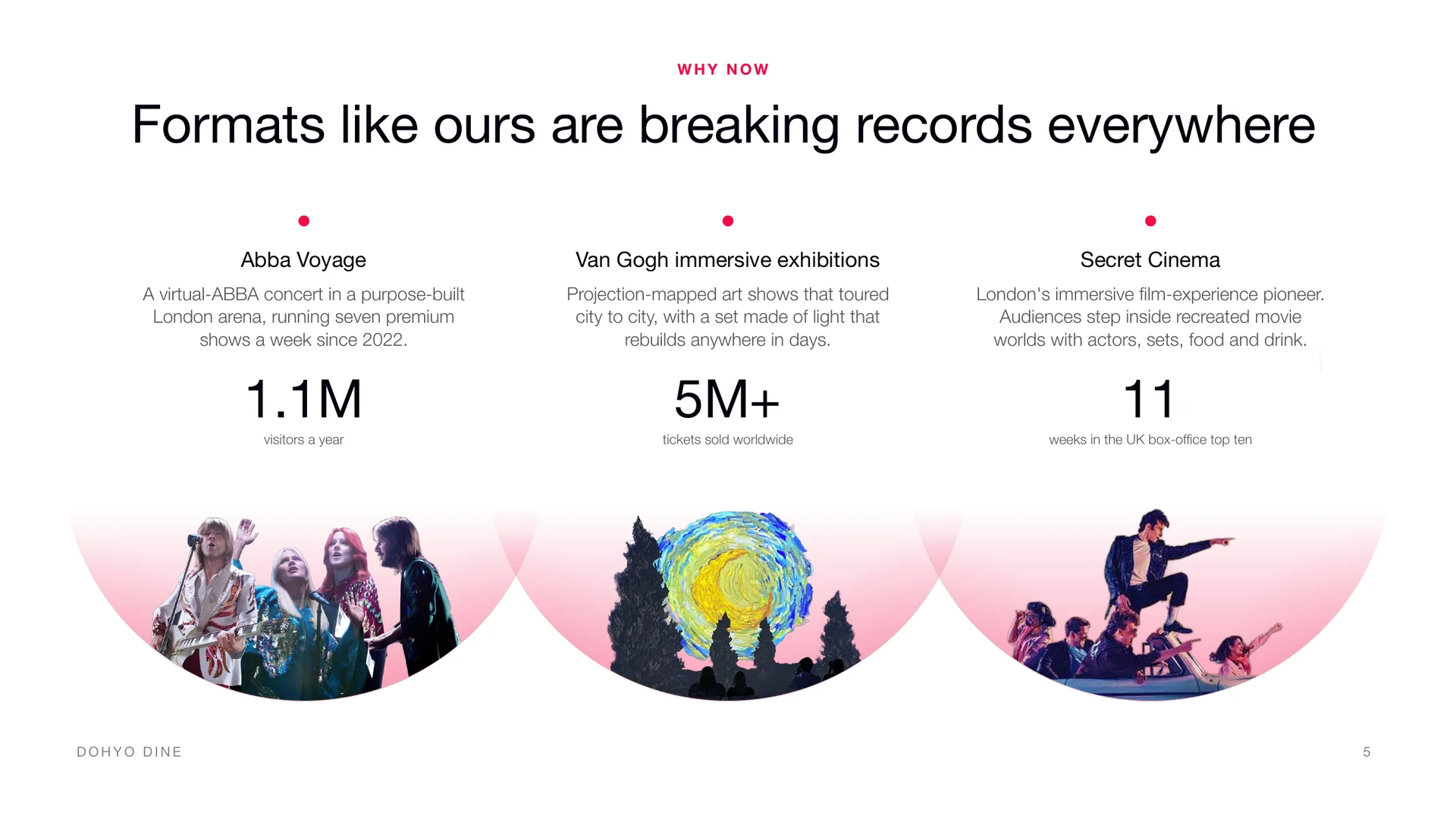
Owned assets.
The set is an owned asset, and a planned owned venue would earn revenue year-round.
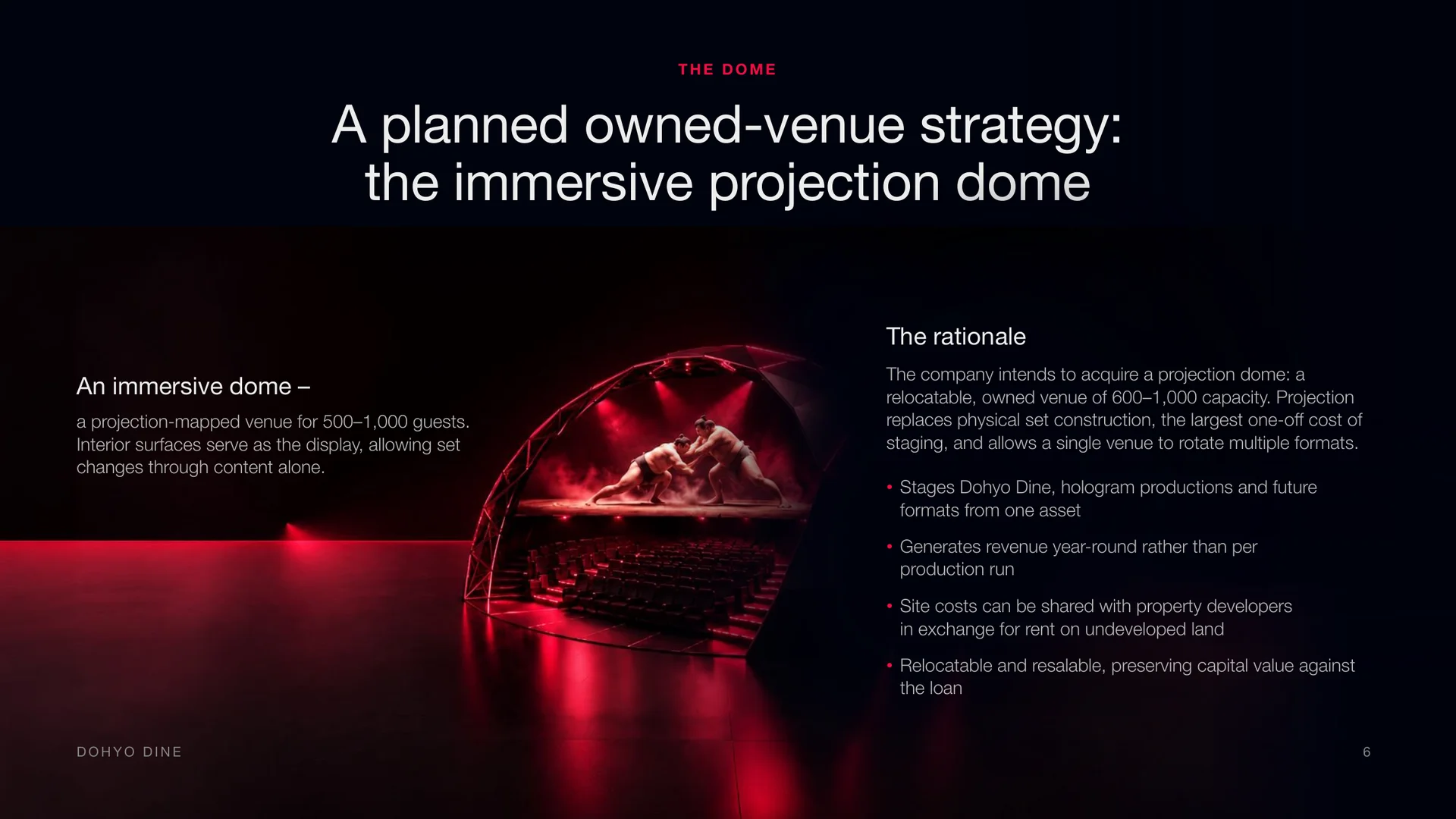
What we did: a repayment case with a growth story
A format with proven demand, strong margins and a clear path to scale, told the way a lender reads.
Narrative
Rebuilt around repayment
- Up frontProof, then economics
- ThenRollout, then the ask, so a credit reader gets the case before the vision
Ticketing data
Demand outpacing supply, in a lender’s units
- Every release sold within days
- 5,600 tickets in a day
- ~1% of sales discounted
- £190 average order
- 1 in 3 added extras
Financial story
From the P&L to the balance sheet
£2.6M revenue in a six-week run, 80% gross margin, 70% operating margin before launch costs, and the full-cycle result net of all launch investment
Business model
More than one way to grow
An owned venue that earns year-round, plus franchising and promoter partnerships.
Rollout
Dated
UK regions from spring 2027, Northern Europe following, London at scale in the autumn.
Design
Dark, brand-led, numbers first
The proof pages laid out like a credit summary.
Results
- £3M lender presentation in market for the 2027 rollout
- £1.1M of launch costs shown as non-recurring
- 3 growth routes: touring, owned venue, franchise and partnerships
- A one-season P&L turned into a repayment case: cash before cost, owned assets, low leverage and a dated expansion
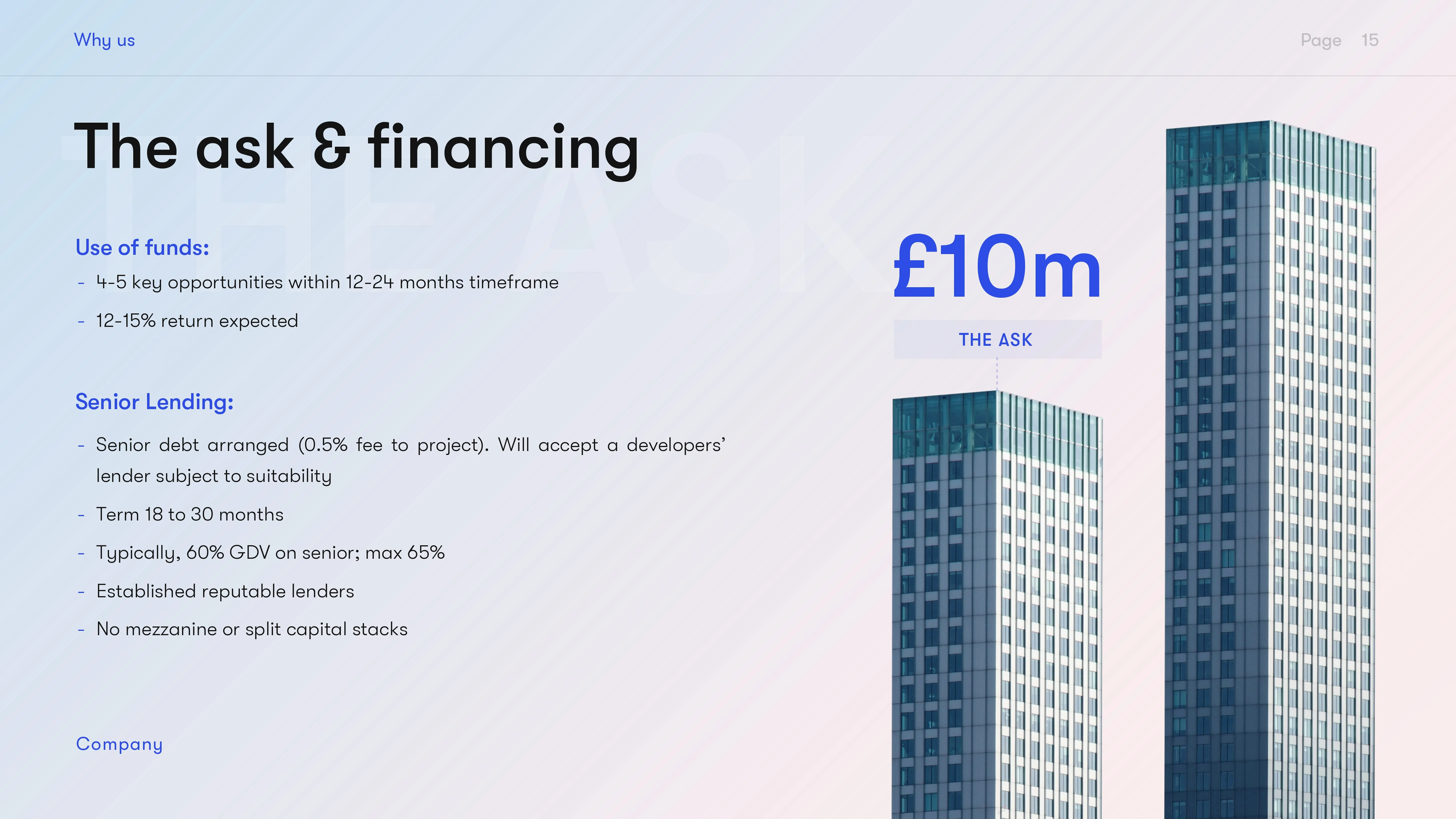
The lender deck










 $10MSeries A
A $10M Series A round for a beverage company
3 term sheets14-day revampRead the story $500Kpre-seed
$500K pre-seed raise for a beauty brand
Oversubscribed in 3 weeksRead the story $1.7Mseed
Pitch deck that raised $1.7M for a vegan restaurant chain
Read the story $160Mretail sales
Market entry plan
15% market share, up from 5%South KoreaRead the storyRaising debt for a consumer or entertainment business?
Waveup builds the repayment case.

