Consumer health / Success case
Oversubscribed $6M longevity pre-seed: teaser, deck and business model
A pre-launch women’s longevity brand had no product on the market and no sales. It asked for $4.2M and raised $6M.
At a glance
Pre-seed raised
$6M
Against a $4.2M target, before launch.
- Team firstThe founders as the traction
- Teaser deckTo open doors
- Full deckTo close
- $6M raised43% oversubscribed
Oversubscribed
43%
Raised against a $4.2M target
The proof
Team, comparables, audience
With no product on the market
Client
Pre-launch women’s longevity brand
- Supplements
- Skincare
Scope
- Narrative
- Teaser deck
- Opportunity deck
- One-page business model
- Design
The challenge: nothing to point at
Nothing to point at. No product on the market, no customers, no revenue, while consumer investors usually want proof a product sells.
A hard category. Consumer startups had just had their weakest funding quarter since at least 2019, and “another supplement brand” gets a polite no.
Proof from elsewhere. The case had to rest on what the company had: founders who had built and sold brands before, an engaged audience, a fast-growing category.
The story: the first longevity brand made for women
On paper, another pre-launch supplement brand in a crowded wellness market, with nothing sold yet.
No product on the market, no customers and no revenue, in the weakest stretch for consumer fundraising since at least 2019. “Another supplement brand” gets a polite no.
The first longevity brand made for women, who spend 25% more of their lives in poor health than men.
It starts with one science-backed product and grows into supplements and skincare. The founders built consumer health brands to $90M+ in annual revenue, and the brand launches to an audience of hundreds of thousands.
What we learned: why pre-launch consumer brands struggle to raise
Without sales, the default answer is “come back after launch”. The numbers behind that, and behind the exceptions:
- $800M raised by consumer startups in Q1 2025, their weakest quarter since at least 2019
- $700K median consumer seed round, a six-year low
- 2.5x larger angel and seed rounds for serial founders, at about 1.9x higher valuations
- $1T a year that closing the women’s health gap could add to the global economy by 2040
Generic pitches lose, and buying attention is the most expensive part of building a consumer brand. A brand with its own audience skips that cost.
What gets funded, and how the deck shows it
With no sales to show, three things carried the case.
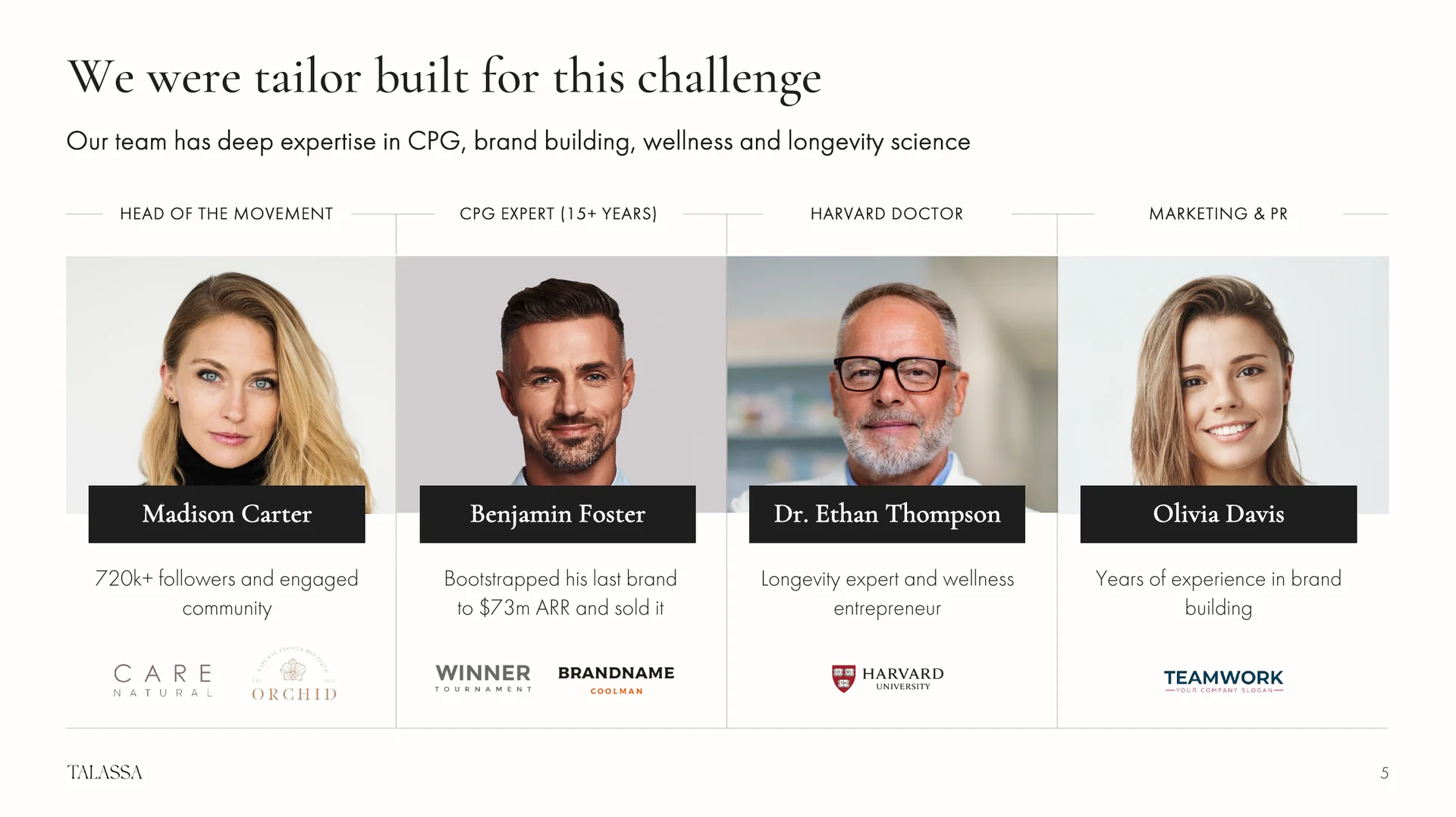
Founders who have done it before.
Brands built to $90M+ a year, an exit, a medical co-founder and a scientific board. At pre-seed, the team was the traction.
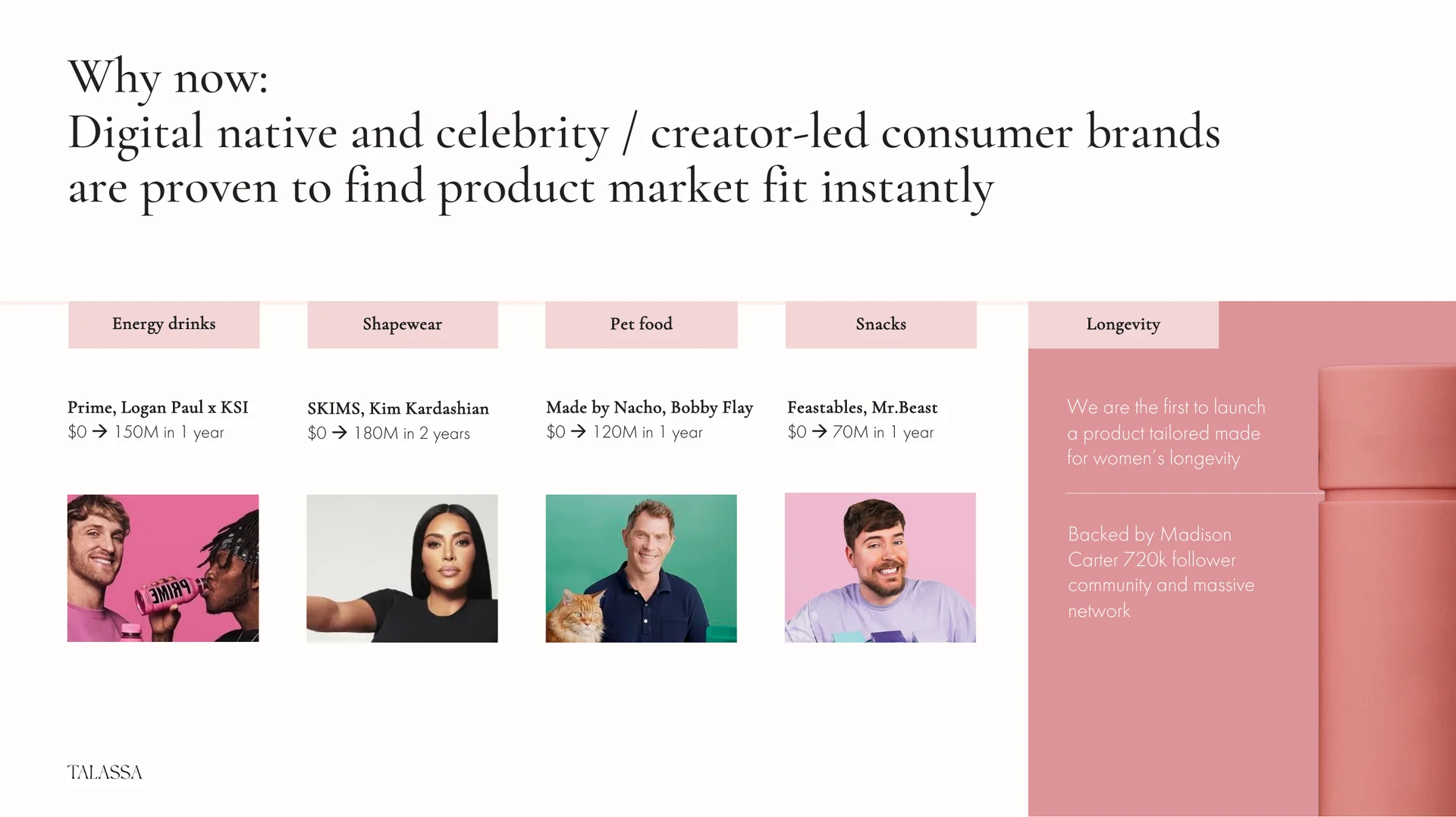
Similar brands that have already made it.
Creator-led brands that went from launch to nine-figure sales within a year or two, with this company placed in that pattern.
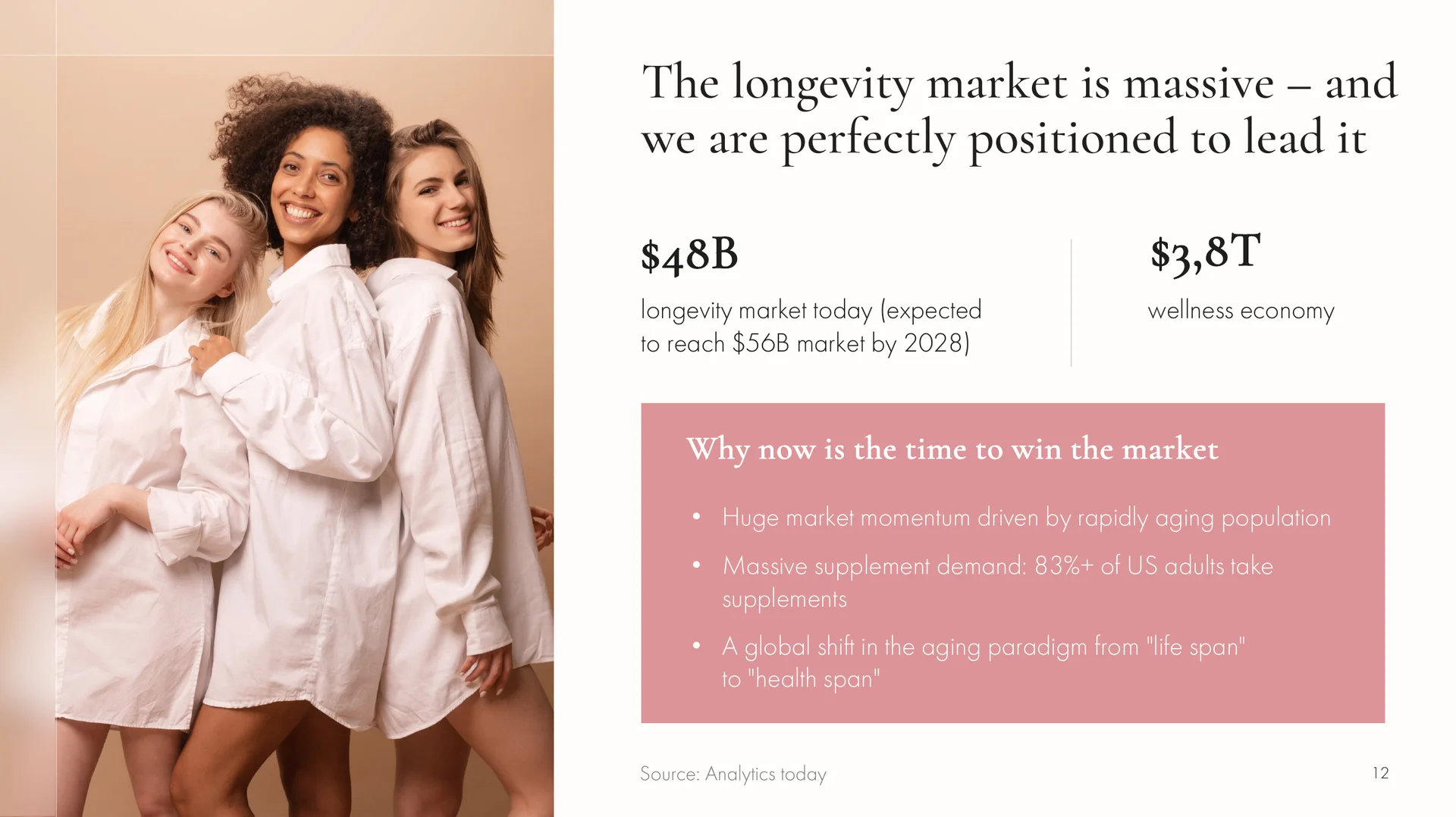
A big market that’s badly served.
A longevity market that’s massive, and a women’s health gap worth $1 trillion a year to close.
What we did: three documents, one story
Built on what investors could back before launch.
Narrative
The first longevity brand built for women: a new category inside a huge, badly served market.
Team first
The founders’ track record up front: brands built to $90M+, an exit, a medical co-founder.
Comparable successes
Brands that reached nine-figure sales on a founder’s audience, and this company in that pattern.
Distribution
The founder’s community of hundreds of thousands as the go-to-market, cutting the cost of early customers.
Three documents
A teaser to open doors, a full opportunity deck to close, and a one-page business model.
Design
A warm, premium look that matches the brand and the women it’s for.
Results
$6M raised against a $4.2M target, 43% oversubscribed.
Funded before launch, with no product on the market and no sales. Three documents, one story: a teaser to open doors, a full deck to close, and one page to check the numbers.
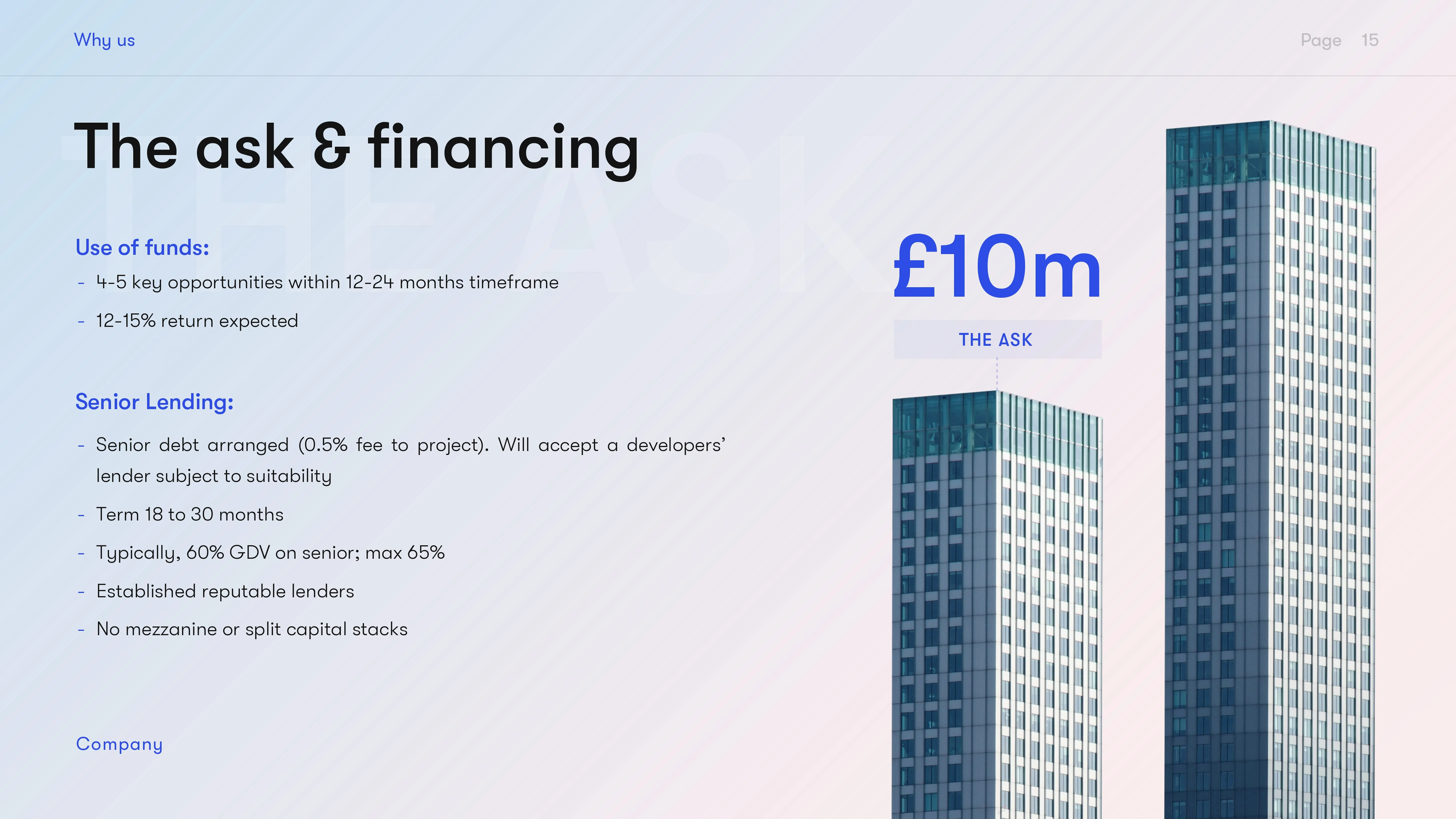
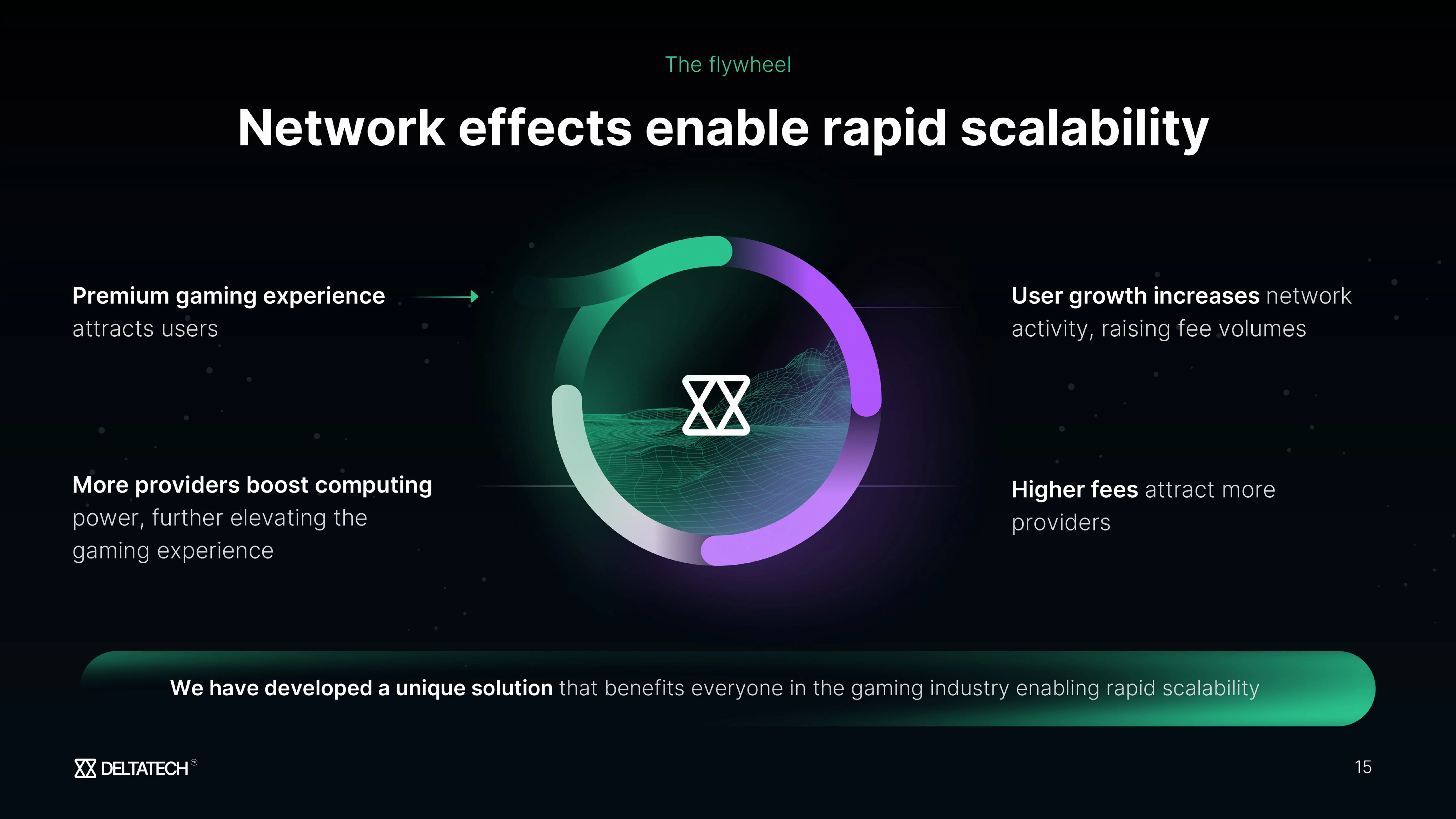
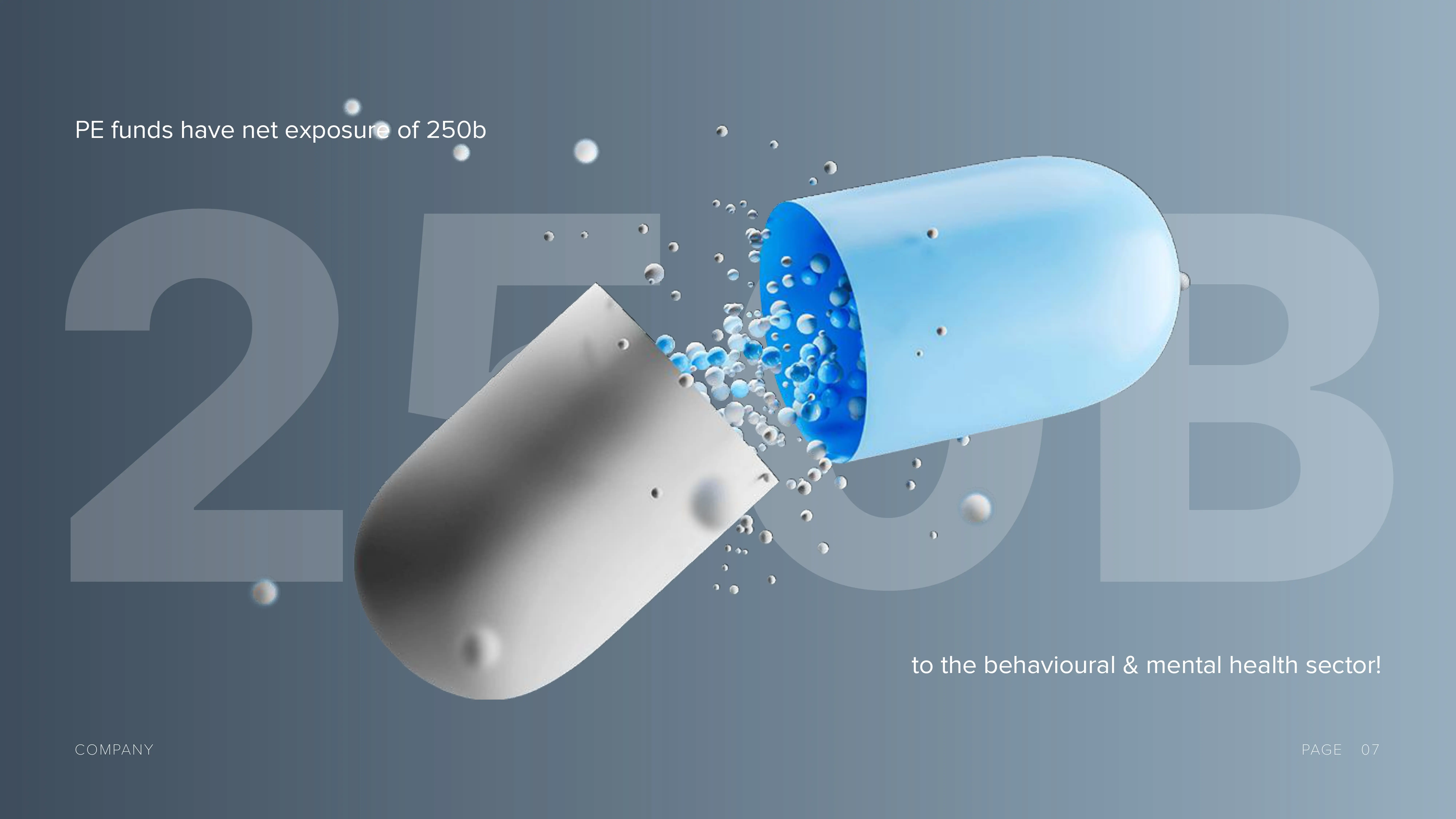
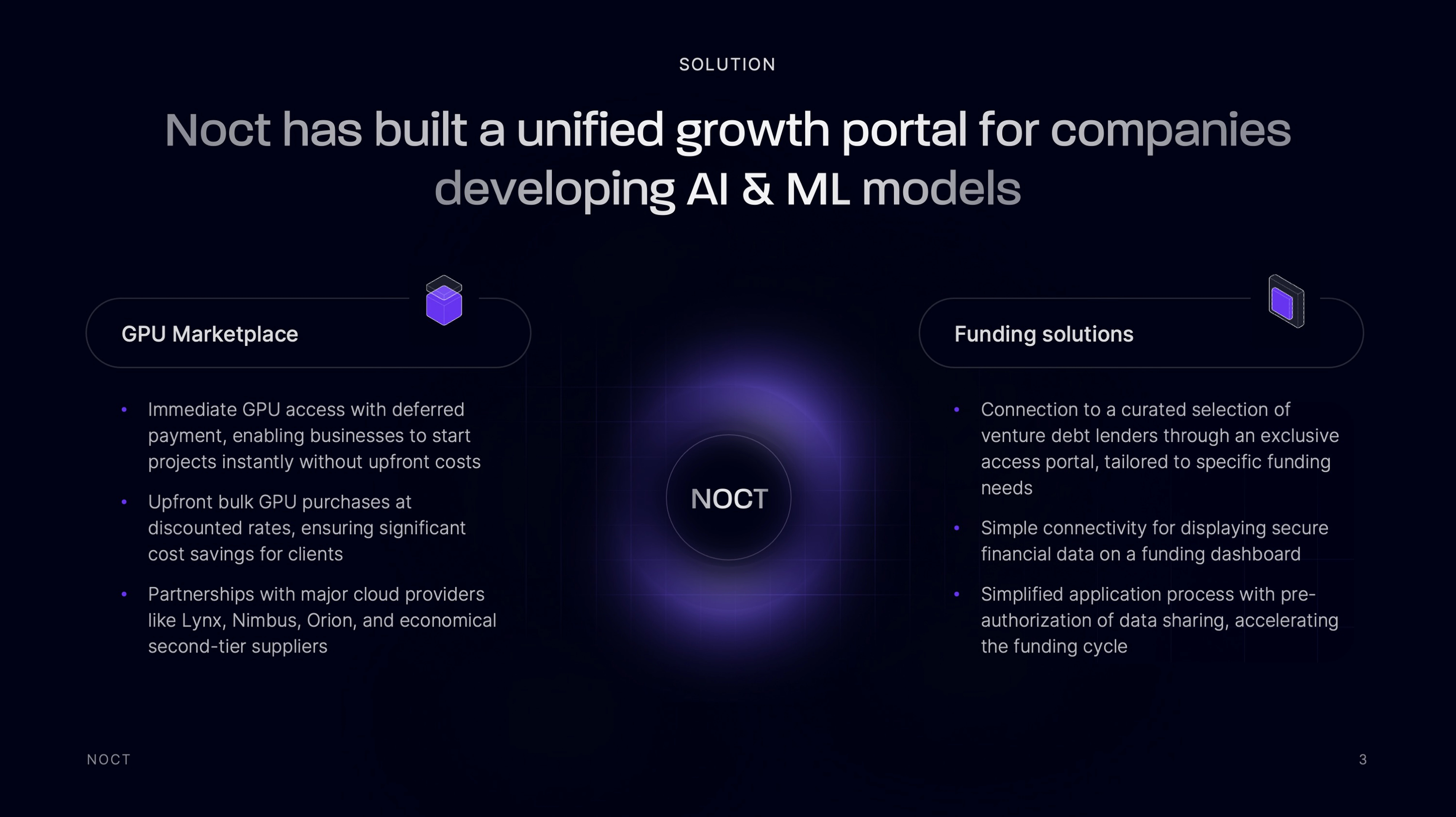
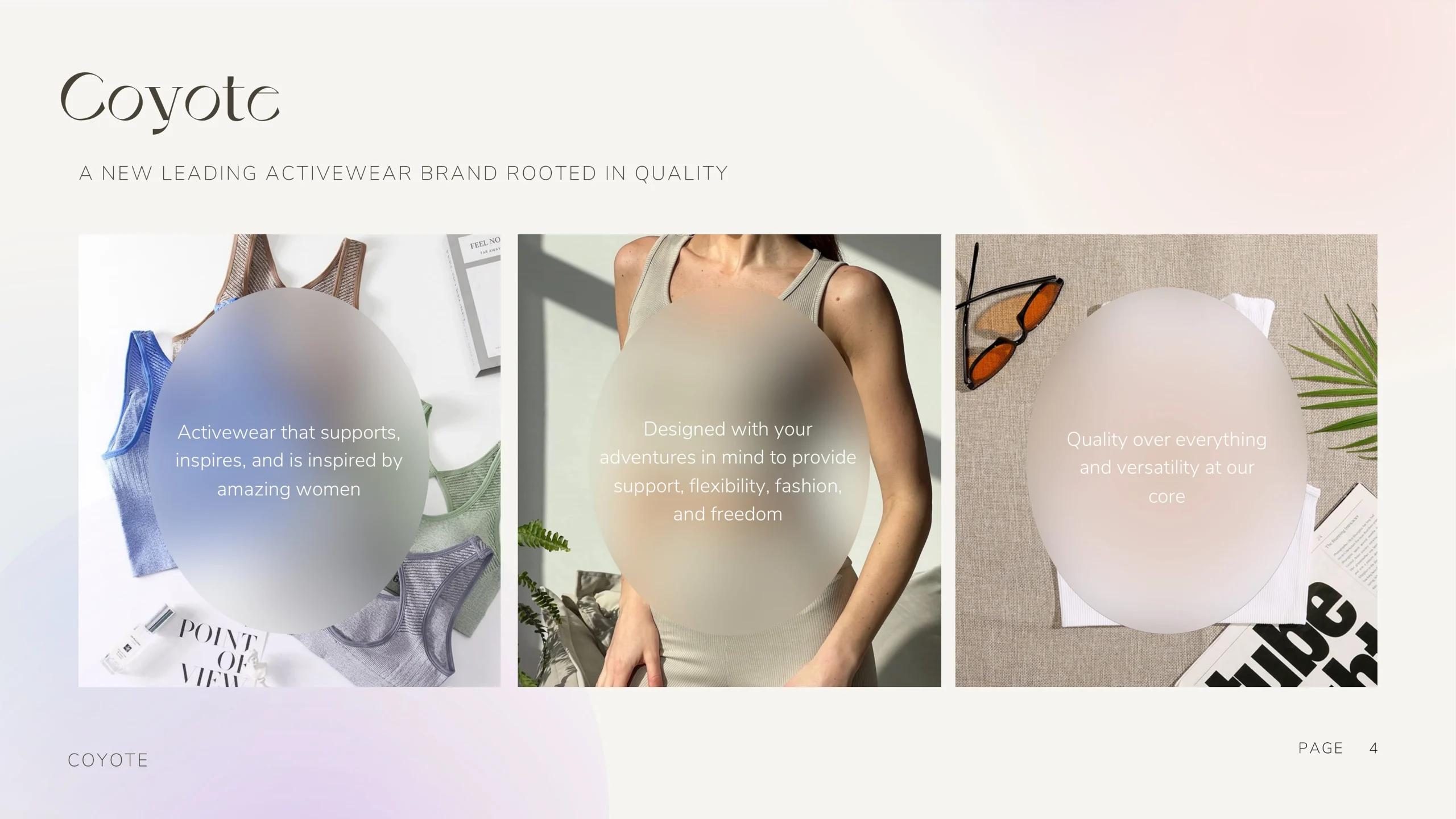
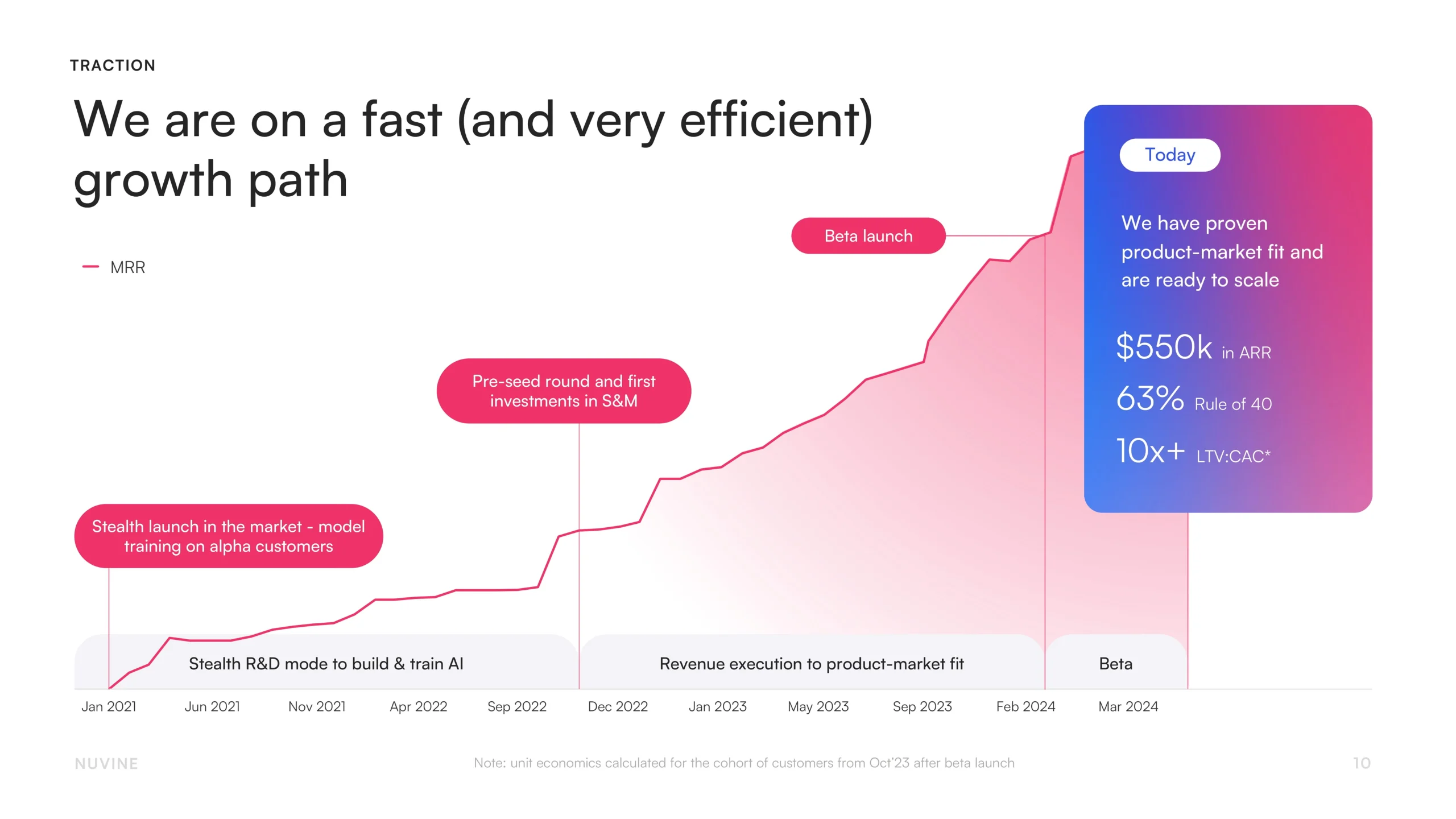
The investor deck






 $1.5Mpre-seed closed
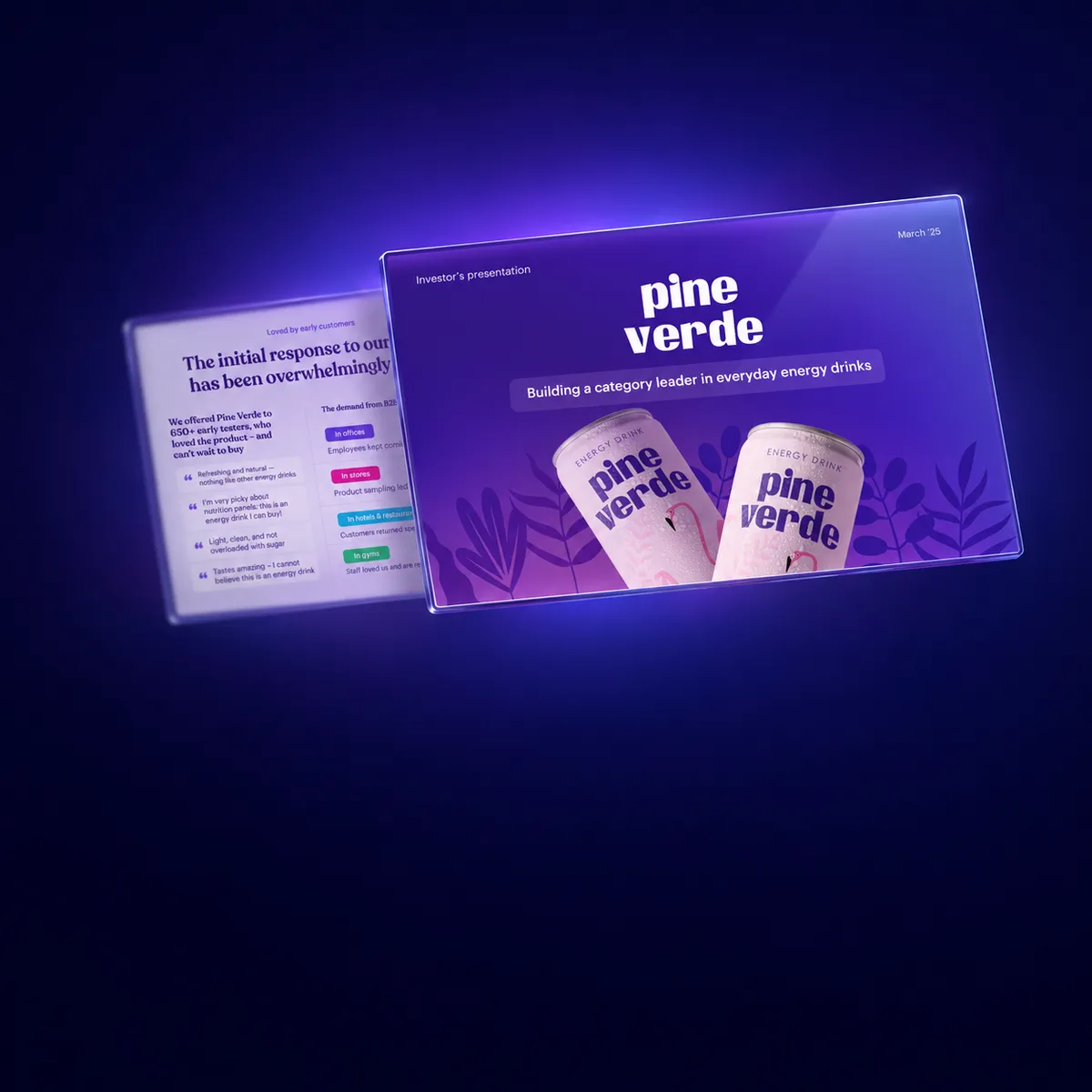
$1.5M beverage pre-seed: investor deck and financial model
Read the story $10MSeries A
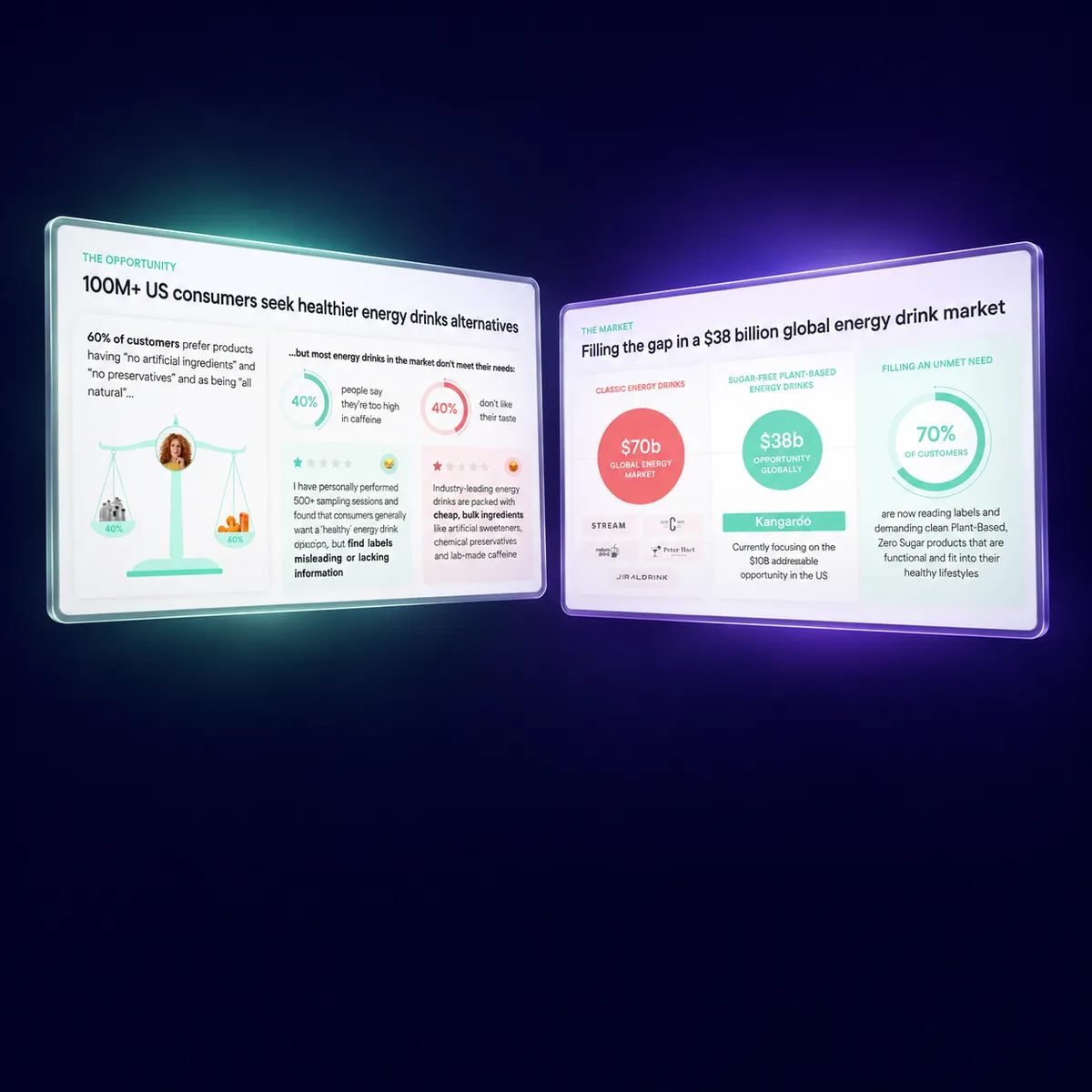
A $10M Series A round for a beverage company
Read the story $500Kpre-seed
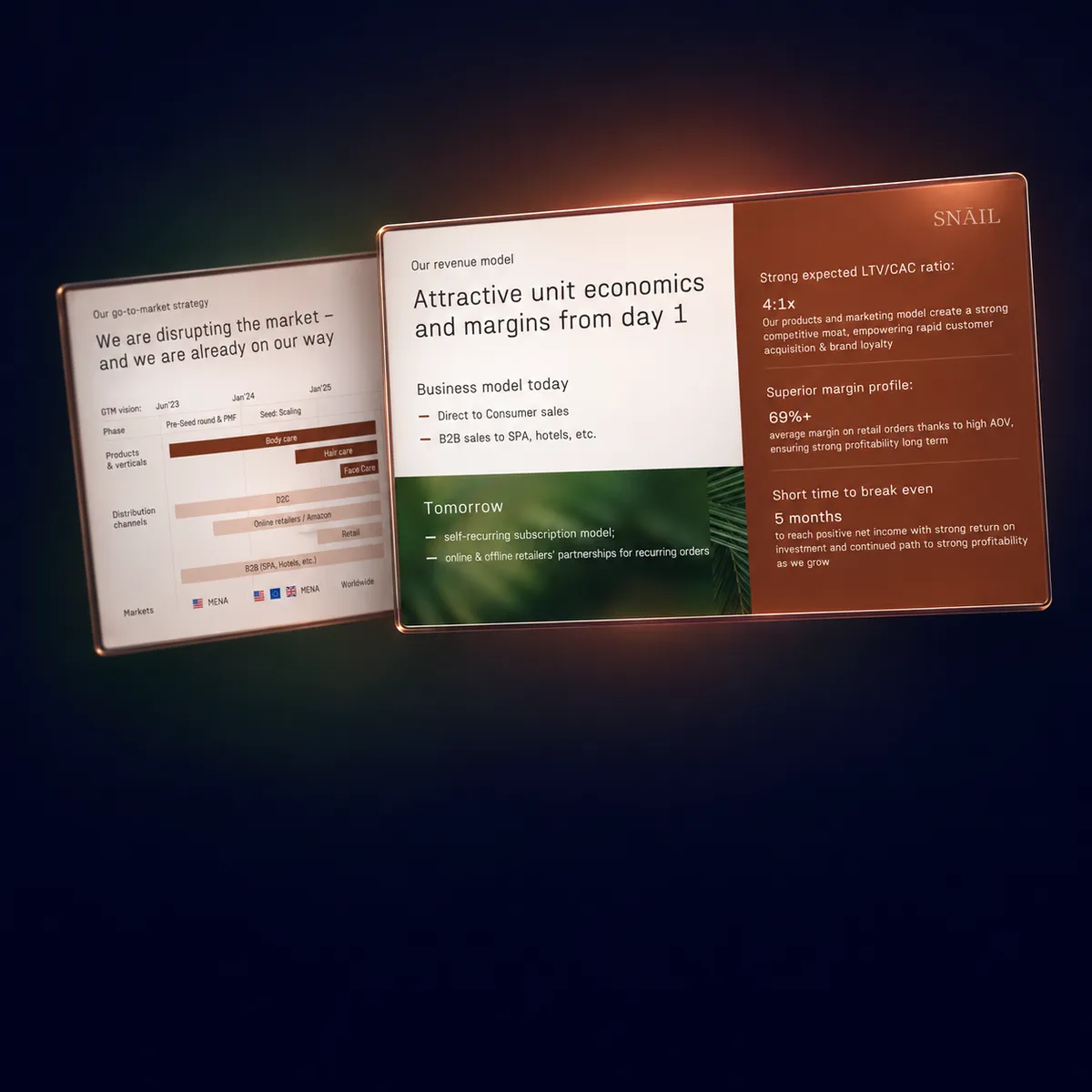
$500K pre-seed raise for a beauty brand
Read the story $1.7Mseed

Pitch deck that raised $1.7M for a vegan restaurant chain
Read the storyRaising before launch?
We build the case investors can back before the sales arrive.

