Industry: Generative AI
Generative AI startup funding
Model labs take the biggest cheques, while app and agent startups compete for the rest. Investors now ask what each task costs you to run, and our decks and models answer that first.
- Investor lists for model builders, AI apps and agent startups
- Models that track token costs, compute and gross margin
- Waveup prepares investor materials for generative AI companies: $3B+ raised for 600+ startups since 2014
In short
What is generative AI startup funding?
Generative AI startup funding is money for companies that build AI models, or the apps and agents that run on them. It comes from angels, AI-native funds, chip makers' venture arms and compute grants. Crunchbase counted $88.9B for foundational AI startups, the model labs, in 2025. Most went to a few labs, so smaller startups face hard questions on margins.
- Who it's for
- Model builders, AI apps and agent startups, pre-seed to Series D+
- What we build
- Investor deck, financial model, valuation, investor list, data room
- Prices
- Deck from $6,000, model from $3,000. Flat fees
- Track record
- $3B+ raised for 600+ startups since 2014
Market data checked on 6 November 2026. Sources are under each section.
Can a generative AI startup still raise in 2026?
Yes. Money keeps pouring into generative AI, but most of it pools around a few model labs. Everyone else needs proof of revenue and margin.
The opportunity
Companies now pay for generative AI at scale, from coding tools to agents.
- Coding became the first big paid use of generative AI
- Agents now run whole tasks, not just chats
- Falling token prices make new products cheaper to run
The problem
Model labs raised $178B in the first quarter of 2026, by Crunchbase's count. Most of it went to OpenAI, Anthropic and xAI, while app and agent startups compete for the rest.
Market size
How big is the generative AI market in 2026?
By September 2026, companies were spending $176.8B a year to run generative AI, Menlo Ventures estimates. That is more than five times the 2025 level. Most of the growth comes from four places:
- Coding: tools that write and review code take $34.0B of that spend
- Agents: 74% of AI builders now use agents to manage workflows and tasks
- Cheaper models: the blended price of closed-model tokens fell 24% in a year
- New budgets: 55% of AI dollars is new spend, not money moved from software or staff
Venture capital
Where is generative AI venture money going?
Funding for foundational AI startups, the labs that build models, jumped after ChatGPT's launch and again in 2025. In October 2026, Anthropic filed for a Nasdaq listing, so a big exit for a model lab may be near.
went to companies in Dealroom's generative AI category in 2025
Series D for Mistral in September 2026, at a valuation of more than €21B
Cognition's valuation after it raised over $2B for its Devin coding agent in September 2026
Who invests in generative AI startups?
AI-native seed funds, deep-tech and multi-stage VCs, a chip maker's venture arm and free EU compute. Our list of 15 AI venture capital firms names more.
Investor database
AI and deep tech investors in our database
The funds with the most AI investments. Pick a stage, or open a fund for its cheque sizes.
Top 5 by AI investments
Investments by industry
- AI & Deep Tech28%
- Software & Apps27%
- Social media13%
- Rounds
- SeedSeries ASeries BSeries C+
- Average cheque
- $10M–$50MOver $50M
- Based in
- San Francisco, United States
39 investments in total, 44 tagged AI & Deep Tech.Open the full fund profile
Investments by industry
- AI & Deep Tech30%
- Software & Apps24%
- Fintech & Financial services6%
- Rounds
- Pre-seedSeedSeries ASeries B
- Average cheque
- $0–$100K$100K–$500K$500K–$1M
- Based in
- Palo Alto, United States
- Invests in
- USA
45 investments in total, 19 tagged AI & Deep Tech.Open the full fund profile
Investments by industry
- AI & Deep Tech27%
- Software & Apps17%
- Healthtech & Wellness15%
- Rounds
- SeedSeries ASeries BSeries C+
- Average cheque
- $100K–$500K$500K–$1M$1M–$3M$3M–$10M
- Based in
- Luxembourg
- Invests in
- Israel, Europe, USA +1
31 investments in total, 16 tagged AI & Deep Tech.Open the full fund profile
Investments by industry
- Software & Apps21%
- AI & Deep Tech18%
- Hardware. Robotics & IoT11%
- Rounds
- Pre-seedSeedSeries ASeries BSeries C+
- Average cheque
- $100K–$500K$500K–$1M$1M–$3M
- Based in
- Boston, United States
- Invests in
- USA
94 investments in total, 14 tagged AI & Deep Tech.Open the full fund profile
Investments by industry
- Software & Apps15%
- AI & Deep Tech13%
- Energy & Utilities7%
- Rounds
- SeedSeries ASeries BSeries C+
- Average cheque
- $500K–$1M$1M–$3M$3M–$10M$10M–$50M
- Based in
- Menlo Park, United States
- Invests in
- USA
1260 investments in total, 13 tagged AI & Deep Tech.Open the full fund profile
From our investor database.
Where do generative AI pitches lose investors?
We asked 56 VCs why they pass on startups for our Fundraising 2025 study. Revenue growth, unit economics, burn and missed milestones topped their answers, ahead of defensibility and crowded categories. In generative AI, most of those doubts come back to compute and data.
Training runs that keep getting dearer
Epoch AI estimates the cost of frontier training runs has grown 2.4 times a year since 2016. Each new model needs a bigger round than the last.
What investors ask
- What will the next training run prove, and who pays for the one after?
What your deck shows
- A compute budget per run, tied to a milestone
- Secured GPU access: credits, grants or capacity deals
Agents that burn tokens
Anthropic found multi-agent systems use about 15 times more tokens than a chat. Usage that delights a customer can still lose you money.
What investors ask
- What does one finished task cost you, and what do you charge for it?
What your deck shows
- Cost per task next to price per task
- How routing work to smaller models cuts the bill
Prices that keep falling
Open-source model tokens cost $0.13 per million on average in 2026, Menlo Ventures says. Cheap models help your margin, but they help every rival too.
What investors ask
- If model prices halve, does your margin grow, or does your price fall?
What your deck shows
- Pricing tied to outcomes, not to tokens
- Gross margin by customer cohort, month by month
Rules on models and training data
EU rules for general-purpose AI models have applied since 2 August 2025. Model makers need a policy to comply with EU copyright law.
What investors ask
- Do you have the rights to the data your model learns from?
What your deck shows
- Where your training data comes from, and on what terms
- Which EU AI Act duties fall on you, and which on your model supplier
How we help you raise
Flat fees agreed before we start. No success fee on advisory work.
Your stack, your edge over the labs and your unit economics in one story.
Token bills, GPU spend and gross margin by cohort, month by month.
A range checked against recent model, app and agent rounds.
AI-native seed funds, deep-tech VCs and chip makers' funds for your stage.
Data sources, licences, evals and model costs, in the order investors check.
For a sale to a lab, a platform or another strategic buyer.
Raises for an agent-based legal AI company and an AI adtech startup whose own model had left out LLM costs. Also an enterprise AI seed deck and a sovereign AI compute company.
 £200K ARRsigned in under a week
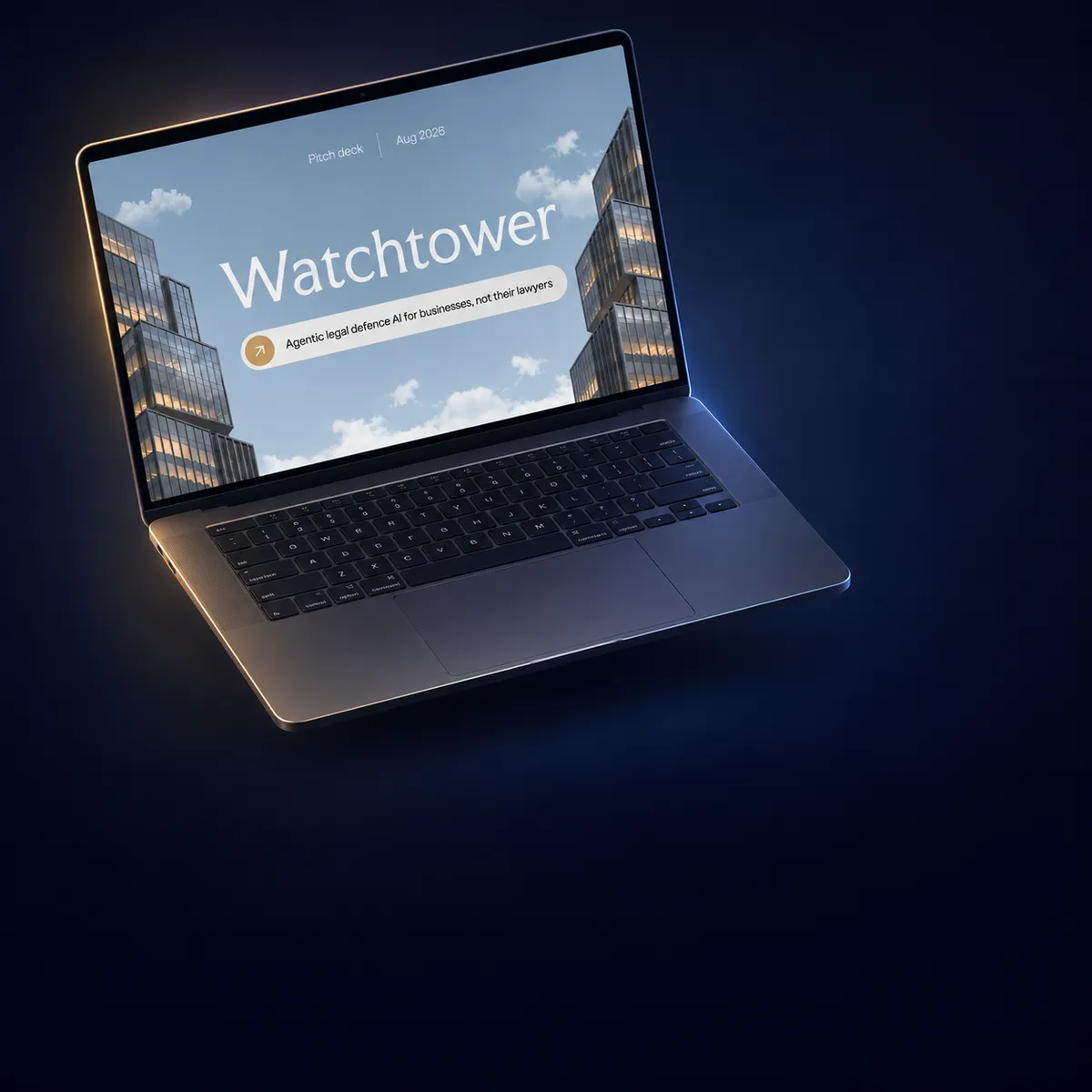
A £1M pre-seed deck, a rebrand and a sales deck that landed £200K ARR in under a week
Read the story $6Mseed

$6M seed round financial model for AI AdTech startup
Read the story €5Mseed round, now raising

The €5M seed deck that put an enterprise AI company in front of tier 1 VCs
Read the story $100Mdebt facility
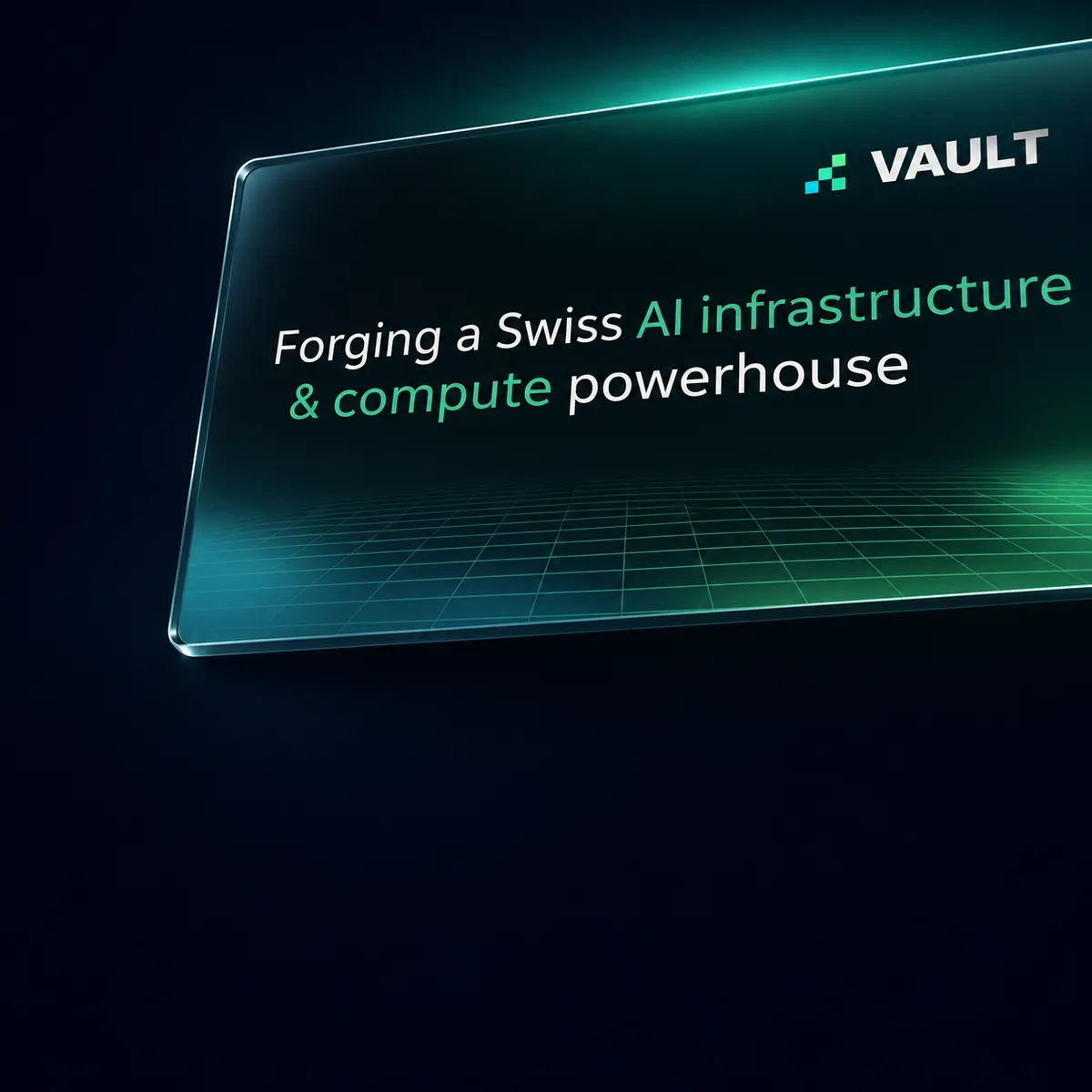
From a $5M seed to a $100M debt facility for a sovereign AI company
Read the storyWho we are
Waveup is a London-based fundraising and growth advisory, working in 60+ countries and 90+ industries. Since 2014 we have built the decks, models, CIMs and valuations behind $3B+ raised for 600+ startups. Our partner Olena Petrosyuk led commercial growth at Klevu, a VC-backed AI search company, through its 2025 exit into PSG's portfolio.
About usGenerative AI startup funding FAQ
How do generative AI startups get funding?
How much money has been invested in generative AI?
How are AI agent startups funded?
Is generative AI profitable?
Should a generative AI startup train its own model?
How much does help with a generative AI raise cost?
Industries we work with
Artificial Intelligence
- Artificial Intelligence
- AI Infrastructure
- Generative AI
Related industries
Raising for a generative AI company?
Share your round size and what one task costs you to run. We'll show you how investors will read those numbers.

