Industry: VR & AR
Immersive tech startup funding
Immersive tech money now follows buyers who already pay: employers who train staff, venues that sell tickets and funded studios. We help XR founders show investors those numbers.
- Investor and grant lists for XR training, venues, content and tools
- Models built on seats, site payback and project funding
- Waveup prepares investor materials for immersive tech companies: $3B+ raised for 600+ startups since 2014
In short
What is immersive tech startup funding?
Immersive tech startup funding is the money XR companies raise for training, venues, content and the tools behind them. It comes from angels, sector and corporate investors, growth funds and public grants. AR and VR headset shipments grew just 5.1% in Q2 2026, IDC says, so investors favour companies with paying customers.
- Who it's for
- XR training, location-based venues, immersive studios and developer tools, pre-seed to Series D+
- What we build
- Investor deck, financial model, valuation, investor list, data room
- Prices
- Deck from $6,000, model from $3,000. Flat fees
- Track record
- $3B+ raised for 600+ startups since 2014
Market data checked on 6 November 2026. Sources are under each section.
Where does immersive tech make money in 2026?
Where an employer, a visitor or a funder pays for a clear result. Headsets alone are a harder sell: mixed reality headset shipments fell 22.3% in Q2 2026.
The opportunity
Buyers already pay where XR beats the old way of doing things.
- Airlines and police train pilots in VR flight simulators
- Venues sell VR sessions to people who own no headset
- UK arts and film funds pay for new immersive work
The problem
Meta, the biggest headset maker, ended business sales of its Quest headsets in February 2026. Training and work apps built for one platform now need a second.
Market size
How big is the immersive tech market in 2026?
IDC forecasts that shipments of AR and VR headsets, XR glasses included, will grow 38.4% a year from 2026 to 2030. Four business lines drive demand beyond home headsets:
- Flight training: Loft Dynamics says its VR airliner simulators are up to 12 times smaller than full-flight simulators
- Workforce training: Transfr's VR career simulations have served 275,000+ learners in the US
- Venues: HOLOGATE says its XR systems for venues and training run in 50+ countries
- Funded content: Immersive Arts has over £8.5M to fund UK artists until 2030
Venture capital
Where is XR startup funding going in 2026?
Beyond smart glasses, immersive companies raised money for venues, flight training and experience studios. Some of it came from customers: Alaska Airlines invested in Loft Dynamics in 2025.
raised in total by Loft Dynamics, which makes VR flight simulators, by August 2025
for Hololight, which streams XR apps to headsets, in July 2025
target date for a stock market listing by Tagbin, an Indian immersive experience company
Who invests in immersive tech startups?
Early-stage VCs, a venture builder and a UK grant programme. Headsets are covered on our virtual reality page, smart glasses on our augmented reality page.
Investor database
VR and AR investors in our database
The funds with the most VR and AR investments. Pick a stage, or open a fund for its cheque sizes.
Top 5 by VR and AR investments
Investments by industry
- Software & Apps30%
- AI & Deep Tech23%
- Healthtech & Wellness14%
- VR & AR10%
- Rounds
- Pre-seedSeedSeries ASeries C+
- Average cheque
- $1M–$3M$3M–$10M$500K–$1M$10M–$50MOver $50M
- Based in
- Dubai, United Arab Emirates
109 investments in total, 15 tagged VR & AR.Open the full fund profile
Investments by industry
- Software & Apps45%
- AI & Deep Tech21%
- VR & AR10%
- Rounds
- Series BSeries C+
- Average cheque
- $3M–$10MOver $50M$10M–$50M
- Based in
- Menlo Park, United States
250 investments in total, 14 tagged VR & AR.Open the full fund profile
Investments by industry
- Software & Apps45%
- AI & Deep Tech21%
- VR & AR10%
- Rounds
- Pre-seedSeed
- Average cheque
- $100K–$500K$500K–$1M
- Based in
- Singapore, Singapore
- Invests in
- Southeast Asia
58 investments in total, 14 tagged VR & AR.Open the full fund profile
Investments by industry
- Software & Apps45%
- AI & Deep Tech21%
- VR & AR10%
- Rounds
- Pre-seedSeedSeries B
- Average cheque
- $1M–$3M$3M–$10M$10M–$50M
- Based in
- Los Angeles, United States
25 investments in total, 14 tagged VR & AR.Open the full fund profile
Investments by industry
- Software & Apps45%
- AI & Deep Tech21%
- VR & AR10%
- Rounds
- SeedSeries A
- Average cheque
- $500K–$1M$0–$100K$100K–$500K
- Based in
- Singapore, Singapore
24 investments in total, 14 tagged VR & AR.Open the full fund profile
From our investor database.
What do investors question in immersive tech startups?
Our Fundraising 2025 study asked 56 VCs why they turn deals down. Revenue growth, unit economics, burn and missed milestones led, with defensibility and crowded categories next. Immersive tech adds four tests of its own.
A platform left the business market
Meta stopped selling Horizon managed services and commercial versions of Quest on 20 February 2026. It will support current customers until January 2030.
What investors ask
- Which headsets will your customers buy and manage from now on?
What your deck shows
- Your software tested on at least two headset brands
- Who supplies, sets up and replaces the devices
Training must beat the classroom
PwC found VR courses can cost up to 48% more to build. In its 2020 study, VR matched classroom costs at 375 learners.
What investors ask
- How many learners does a customer need before XR costs less than today's training?
What your deck shows
- Cost per trained learner, against the method it replaces
- Seats, renewals and expansion for each customer
Venues need cash before they earn
Sandbox VR asks franchisees for at least $1M in liquid assets. A four-holodeck store needs about 4,000 to 5,500 sq ft.
What investors ask
- When does a new site pay back what it cost to open?
What your deck shows
- Revenue, margin and payback per site, by opening year
- Which sites you fund and which partners or franchisees fund
Content leans on grants
Immersive Arts received over 5,000 applications across two open calls. Its largest grants in 2026 were £50,000.
What investors ask
- What pays for your next project if a grant or a platform says no?
What your deck shows
- Revenue by source: commissions, tickets, licences and grants
- The rights you keep after each funded project
How we help you raise
Flat fees agreed before we start. No success fee on advisory work.
Who pays, what XR replaces for them and why now.
Seats, sites or titles, device costs and runway, month by month.
A range set against training, venue and software peers.
Training, venue and media investors, plus grants worth applying for.
Customer contracts, device plans and IP, ready for review.
For a sale to a platform owner, a training group or a venue operator.
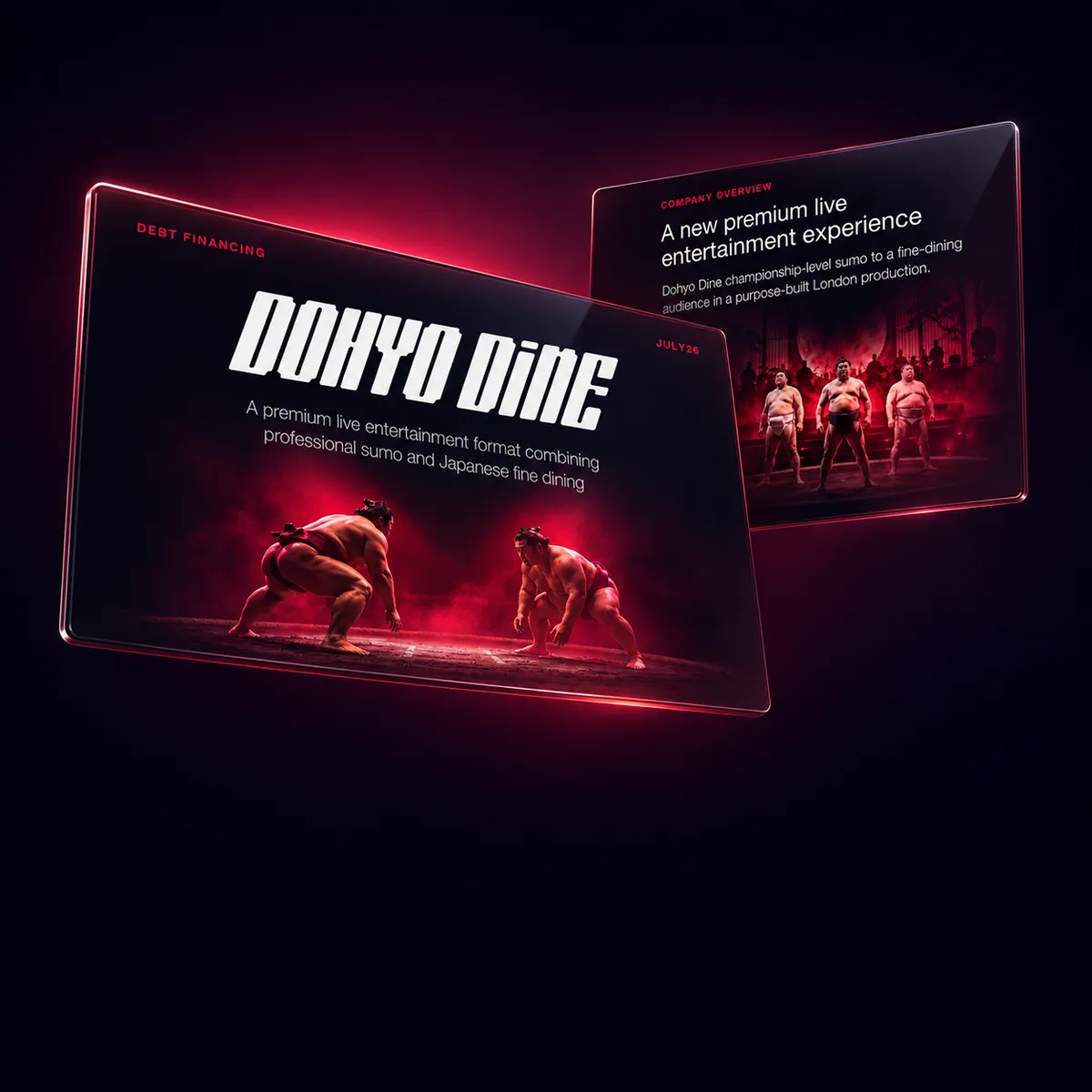
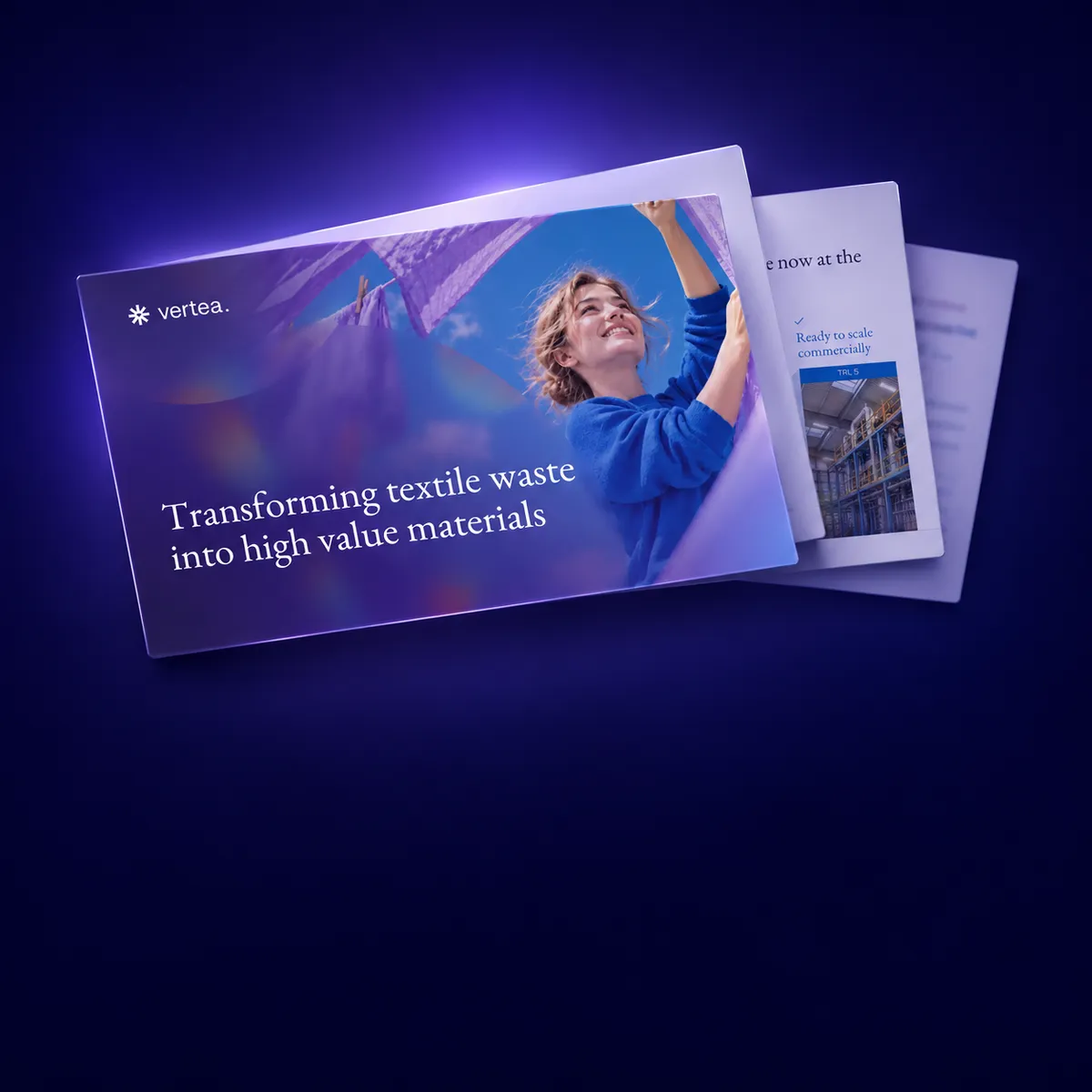
Three nearby raises: a lender deck for a live show, a B2B software Series A and a deep tech seed.


Who we are
Waveup is a London-based fundraising and growth advisory, working in 60+ countries and 90+ industries. Since 2014 we have built the decks, models, CIMs and valuations behind $3B+ raised for 600+ startups.
About usImmersive tech startup funding FAQ
How do immersive tech startups get funding?
Which immersive tech companies have raised money lately?
How much are big tech companies investing in AR and VR?
Are there grants for immersive tech and XR content?
How do VR arcades and location-based venues raise money?
How much does help with an immersive tech raise cost?
Raising for an immersive tech company?
Send us your buyers, devices and round size. We'll point out the slides investors will push on first.

