Industry: FMCG
FMCG and CPG investors
Household, personal care and packaged food brands raise from a short list of specialists. They judge velocity, margin and repeat buyers, and we build your case on those numbers.
- Who invests in household, personal care and packaged food, by type
- Pitch decks and models that lead with sell-through and margin
- Waveup prepares investor materials for FMCG companies: $3B+ raised for 600+ startups since 2014
In short
Who are FMCG and CPG investors?
FMCG and CPG investors back brands that sell everyday goods: household supplies, personal care and packaged food. Most are specialists: pre-seed CPG funds, consumer VCs, consumer private equity, inventory lenders and the brand owners that buy challengers. Generalist VCs look elsewhere: AI took 82.7% of US venture deal value through September 2026.
- Who it's for
- Household, personal care and packaged food brands, pre-seed to Series D+
- What we build
- Investor deck, financial model, valuation, investor list, extended CIM
- Prices
- Deck from $6,000, model from $3,000. Flat fees
- Track record
- $3B+ raised for 600+ startups since 2014
Market data checked on 5 November 2026. Sources are under each section.
Are FMCG startups still investable in 2026?
Yes, when a brand sells through without deep discounts. Venture money for consumer products has shrunk, but brand owners keep paying for challengers with real sales.
The opportunity
People restock soap, shampoo and snacks every week, in good years and bad.
- Health, beauty and convenience lead global demand growth
- Brand owners such as Church & Dwight keep buying fast-growing challengers
- Online marketplaces let small brands find buyers before stores stock them
The problem
US funding for consumer product brands sold online peaked at $5.0B in 2021, by Crunchbase's count. In 2025, Crunchbase reported that VCs mostly ignored market-ready consumer products.
Market size
What is the FMCG market worth, and what moves it?
US shoppers spent $198.0B on household supplies in 2025, by BEA's count. Personal care products took another $212.5B. Four shifts decide which brands get funded next:
- Price-led growth: higher prices drove nearly two thirds of global FMCG spend growth in NIQ's latest count
- New launches: Circana's top 200 new US products of 2025 sold $6.2B in their first year
- Store-first buying: about 77% of US FMCG sales still happen in physical stores
- Exits to brand owners: Church & Dwight agreed to pay $700M at closing for hand sanitizer brand Touchland
Venture capital
Where has venture money for CPG brands gone?
US funding for consumer product brands sold online spiked in 2021, much of it for aggregators buying small brands. By 2025 venture money had moved to AI, while brand owners kept buying challengers.
fall from the 2021 peak to 2023, in Crunchbase's own count
of US venture deal value went to AI companies through September 2026
agreed by Church & Dwight in 2026 for stain remover brand Miss Mouth's Messy Eater
Who invests in FMCG and CPG startups?
Pre-seed CPG funds, early-stage consumer VCs, consumer private equity, strategic buyers and non-dilutive lenders. More names sit in our list of consumer products venture capital firms.
Investor database
Consumer goods investors in our database
The funds with the most consumer goods investments. Pick a stage, or open a fund for its cheque sizes.
Top 5 by consumer goods investments
Investments by industry
- Consumer Goods & Electronics26%
- Software & Apps14%
- Healthtech & Wellness14%
- Rounds
- Pre-seedSeed
- Average cheque
- Not listed
- Based in
- Palo Alto, United States
- Invests in
- USA
17 investments in total, 11 tagged Consumer Goods & Electronics.Open the full fund profile
Investments by industry
- Software & Apps15%
- Healthtech & Wellness11%
- Hardware. Robotics & IoT11%
- Consumer Goods & Electronics11%
- Rounds
- Pre-seedSeedSeries ASeries BSeries C+
- Average cheque
- $100K–$500K$500K–$1M$1M–$3M$3M–$10M
- Based in
- San Francisco, United States
- Invests in
- USA
813 investments in total, 11 tagged Consumer Goods & Electronics.Open the full fund profile
Investments by industry
- Fintech & Financial services38%
- Consumer Goods & Electronics21%
- Lifestyle10%
- Rounds
- SeedSeries A
- Average cheque
- $1M–$3M$3M–$10M
- Based in
- Chicago, United States
49 investments in total, 6 tagged Consumer Goods & Electronics.Open the full fund profile
Investments by industry
- E-commerce & Retail19%
- Food & Beverage15%
- Consumer Goods & Electronics12%
- Rounds
- SeedSeries ASeries B
- Average cheque
- $1M–$3M$3M–$10M
- Based in
- New York, USA
- Invests in
- USA, Europe
55 investments in total, 6 tagged Consumer Goods & Electronics.Open the full fund profile
Investments by industry
- Software & Apps30%
- Fintech & Financial services28%
- Consumer Goods & Electronics11%
- Rounds
- SeedSeries A
- Average cheque
- $1M–$3M$3M–$10M
- Based in
- Austin, United States
- Invests in
- USA
26 investments in total, 6 tagged Consumer Goods & Electronics.Open the full fund profile
From our investor database.
Where do CPG brands lose investors?
In our Fundraising 2025 study, 56 VCs named their top reasons to pass. First come revenue growth, unit economics, burn and missed milestones, then defensibility and crowded categories. For a packaged goods brand, they become four questions.
Pricing power
US prices for housekeeping supplies rose 1.2% in the year to September 2026. Prices across the economy rose 3.7%.
What investors ask
- If your costs rise, can you raise prices without losing buyers?
What your deck shows
- Gross margin after trade spend, by retailer
- Repeat rate after your last price change
The store brand next to you
Private label held a 24% unit share of US sales, Circana reported in March 2026. Retailers decide which brands sit beside their own.
What investors ask
- Why will shoppers pay more for you than for the store's own brand?
What your deck shows
- Your price gap to private label, and repeat at that gap
- A formula, claim or format a retailer can't copy fast
Big budgets on the same shelf
Church & Dwight spent 11.9% of its net sales on marketing in Q3 2026. Challengers fight for shoppers against budgets like that.
What investors ask
- What does it cost to win a new store, and when does it pay back?
What your deck shows
- Trade spend, slotting fees and promotions per store
- Payback by retailer, in months
An exit big enough to matter
JamJar, a consumer VC run by innocent's founders, looks for brands that can reach a £250m+ valuation. Most exits are sales to big brand owners.
What investors ask
- Which brand owner needs your brand, and at what sales level?
What your deck shows
- Recent deals in your category, with price and sales
- The margin and growth that fit a buyer's portfolio
How we help you raise
Flat fees agreed before we start. No success fee on advisory work.
Your brand's case, led by velocity, margin and retailer reorders.
Units by retailer, trade spend, gross margin and cash needs.
A range benchmarked on recent CPG acquisitions.
CPG funds, consumer private equity, strategics and lenders for your stage.
Retailer terms, co-packer contracts and product claims, in order.
For a sale to a brand owner, or an extended CIM for investors.




Who we are
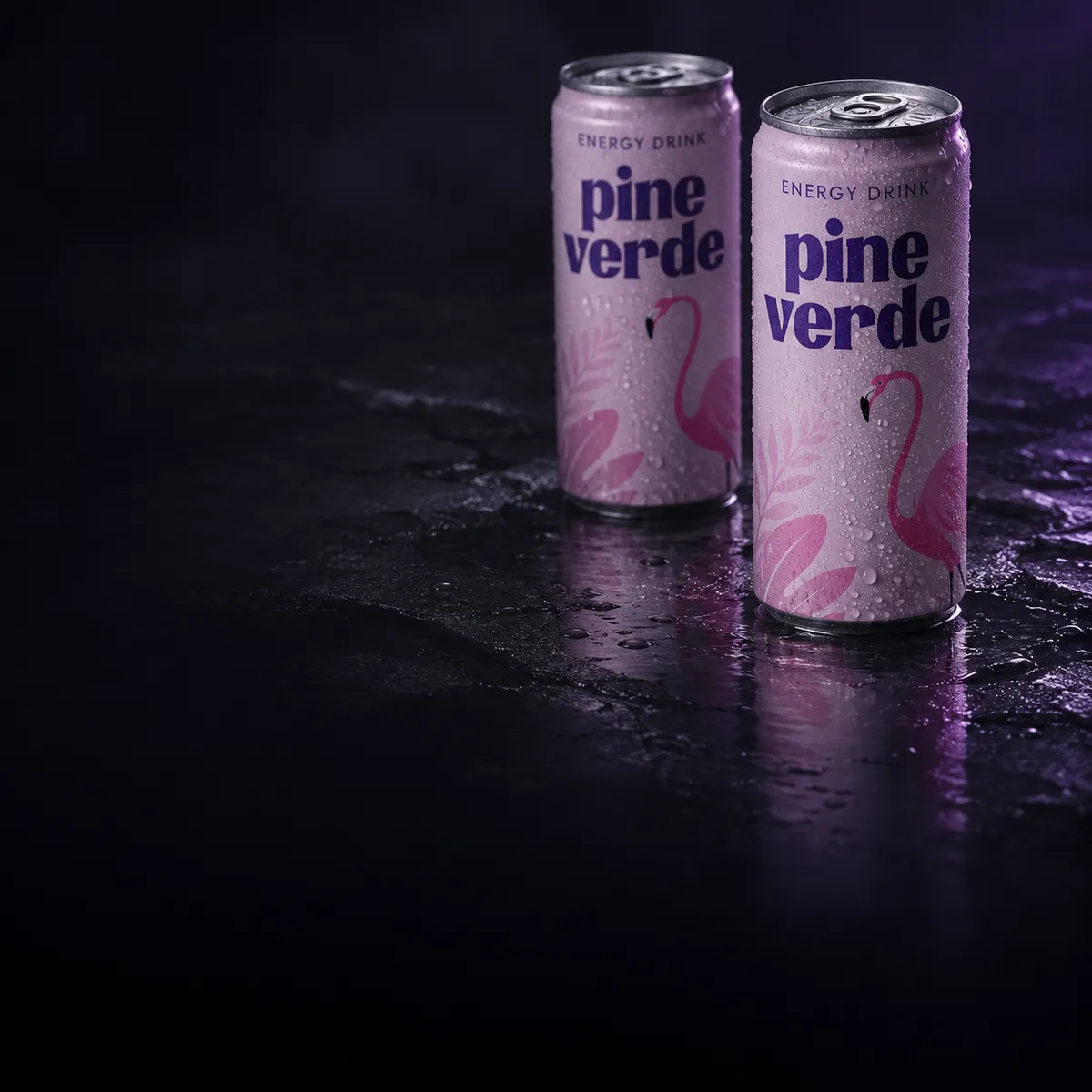
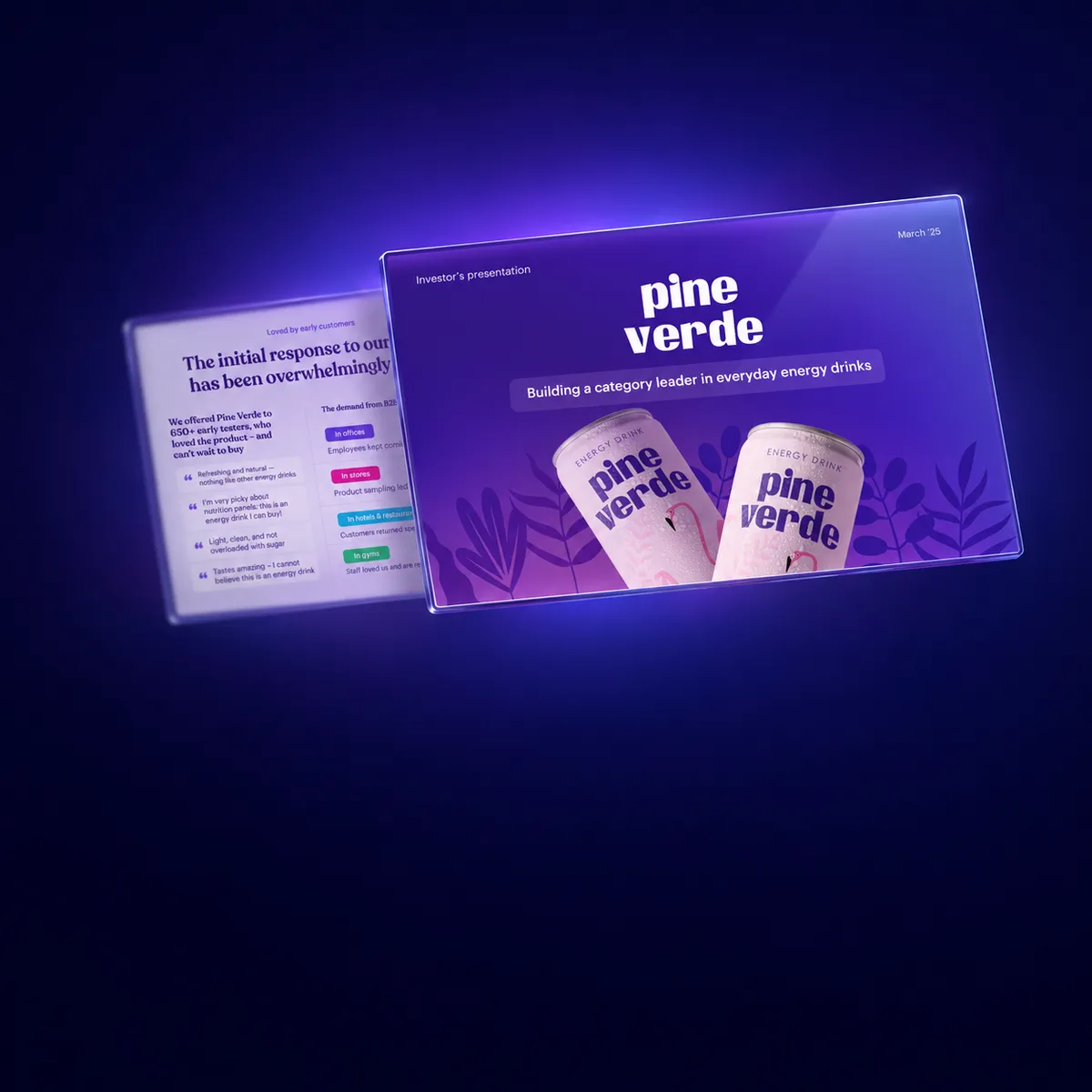
Waveup is a London-based fundraising and growth advisory, working in 60+ countries and 90+ industries. Since 2014 we have built the decks, models, CIMs and valuations behind $3B+ raised for 600+ startups. We prepared the investor materials for a beverage company's $10M Series A. That raise drew 3 term sheets.
About usFMCG and CPG investors FAQ
What do FMCG and CPG mean?
Which investors fund CPG startups?
Should a CPG brand pitch angels or VCs first?
What metrics do CPG investors check first?
Can a CPG brand grow without giving up equity?
What does help with a CPG raise cost?
Raising for an FMCG company?
Send us your category, your stores and your target raise. We'll tell you which numbers investors will test first.

