Industry: Beverages
Beverage startup funding
Money for drinks now flows to energy, protein and alcohol-free brands, as fewer adults drink. Investors back the brands distributors reorder, and we build the case that yours is one.
- Drinks market data, from ready-to-drink cocktails to energy drinks
- Decks and models that prove reorders and margin per case
- Waveup prepares investor materials for beverage companies: $3B+ raised for 600+ startups since 2014
In short
What is beverage startup funding?
Beverage startup funding is the money drinks brands raise to make, ship and sell their products. Angels, drinks-focused funds, big drinks companies and inventory lenders provide it. With only 54% of US adults saying they drink, investors favour energy, protein and alcohol-free brands that distributors reorder.
- Who it's for
- Soft drink, alcohol, coffee and functional drinks brands, pre-seed to Series D+
- What we build
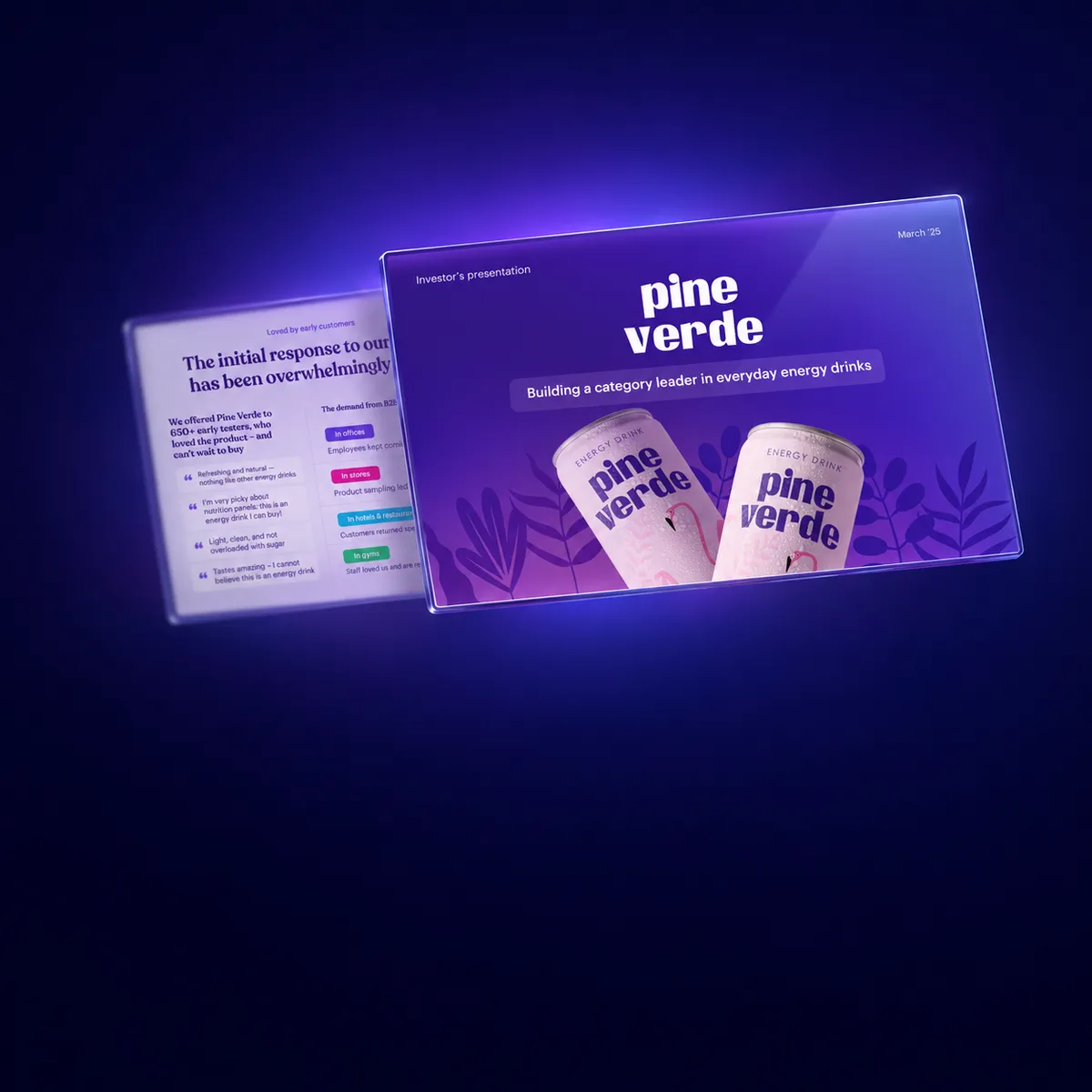
- Investor deck, financial model, valuation, investor list, data room
- Prices
- Deck from $6,000, model from $3,000. Flat fees
- Track record
- $3B+ raised for 600+ startups since 2014
Market data checked on 5 November 2026. Sources are under each section.
Can a drinks brand still raise money in 2026?
Yes, if it rides the shift in what people drink and its distributors keep reordering. The money is there, but it goes to fewer brands.
The opportunity
People buy drinks every day, and what they pour is changing fast.
- Households now spend more on non-alcoholic drinks for home than on alcohol
- Premixed cocktails grow while vodka, tequila and American whiskey sales slip
- Energy drink makers buy challengers that catch on, as Celsius did with Alani Nu
The problem
Alcohol-free drink startups raised a record of over $414M in 2022, by Crunchbase's count, then less in 2023. Fewer brands now get a term sheet, and investors want to see reorders.
Market size
How big is US drinks spending, and where is it moving?
BEA puts US spending on alcohol bought from retailers at $232.9B for 2025. The average household now spends more on non-alcoholic drinks for home than on all alcohol. Four changes matter most to investors:
- Fewer drinkers: 54% of US adults say they drink, a record low held for a second year
- Premixed cocktails: sales of spirits-based ready-to-drinks rose 16.4% in 2025
- Energy drinks: Celsius grew revenue 85.5% in 2025, helped by its purchase of Alani Nu
- Health worries: 51% of US adults say one or two drinks a day harm health
Venture capital
Where is beverage venture capital going in 2026?
Funding for alcohol-free drink startups hit a record in 2022, by Crunchbase's count, then fell in 2023. Its 2025 list of funded drink startups features protein, energy and wellness brands.
raised by alcohol-free drink startups in 2022, a record in Crunchbase's data
in equity raised by alcohol-free brewer Athletic Brewing by mid-2025
of Celsius' 2025 revenue came from Alani Nu, which it bought that April
Who invests in beverage startups?
Drinks specialists, a consumer growth fund, a lender against barrels and a drinks company that buys brands. Five examples by type; for more names, see our food and beverage VC firms list.
Investor database
Food and beverage investors in our database
The funds with the most food investments. Pick a stage, or open a fund for its cheque sizes.
Top 5 by food investments
Investments by industry
- Food & Beverage68%
- Consumer Goods & Electronics12%
- E-commerce & Retail8%
- Rounds
- SeedSeries ASeries B
- Average cheque
- $500K–$1M$1M–$3M$3M–$10M
- Based in
- San Francisco, United States
- Invests in
- USA
96 investments in total, 17 tagged Food & Beverage.Open the full fund profile
Investments by industry
- Food & Beverage30%
- E-commerce & Retail14%
- Software & Apps12%
- Rounds
- Pre-seedSeedSeries ASeries B
- Average cheque
- Not listed
- Based in
- Germany
- Invests in
- Europe
74 investments in total, 17 tagged Food & Beverage.Open the full fund profile
Investments by industry
- Food & Beverage25%
- Biotech19%
- Software & Apps11%
- Rounds
- Pre-seedSeed
- Average cheque
- $0–$100K$100K–$500K$500K–$1M$1M–$3M$3M–$10M
- Based in
- New York, United States
- Invests in
- Israel, MENA, LatAm +6
140 investments in total, 16 tagged Food & Beverage.Open the full fund profile
Investments by industry
- Food & Beverage28%
- CleanTech & Sustainability13%
- Energy & Utilities11%
- Rounds
- Pre-seedSeedSeries A
- Average cheque
- $10M–$50M$3M–$10M
- Based in
- Berlin, Germany
23 investments in total, 13 tagged Food & Beverage.Open the full fund profile
Investments by industry
- Food & Beverage22%
- Consumer Goods & Electronics11%
- Fintech & Financial services11%
- Rounds
- SeedSeries ASeries B
- Average cheque
- $10M–$50M$100K–$500K
- Based in
- Chicago, United States
27 investments in total, 8 tagged Food & Beverage.Open the full fund profile
From our investor database.
Which risks make drinks investors hesitate?
In our Fundraising 2025 study, 56 VCs told us why they turn startups down. Revenue growth, unit economics, burn and missed milestones led, then defensibility and crowded categories. For drinks brands, four worries come up most.
A smaller alcohol market
US spirits sales fell 2.2% in value in 2025, even as more cases shipped. Beer and wine brands feel the same pull: fewer adults drink.
What investors ask
- What makes a distributor push your brand in a shrinking category?
What your deck shows
- Reorders from each distributor, month by month
- Who you win drinkers from, and why they stay
Prices that won't rise
Between September 2025 and September 2026, store prices for spirits fell 1.2%. Wine prices slipped too.
What investors ask
- Can you hold your price when the big brands run promotions?
What your deck shows
- Your margin on each case after promotions and distributor cuts
- Your price against the category leader's
One partner, too much weight
Sales to PepsiCo made up 43.2% of Celsius' revenue in 2025. PepsiCo is also its main US distributor.
What investors ask
- If your distributor drops you or changes terms, what then?
What your deck shows
- Sales split by distributor and channel
- Contract length, exit terms and a second route to market
Cans and ingredients cost more
In June 2025 the US doubled its tariff on imported aluminium, the metal in most drink cans, to 50%.
What investors ask
- How much margin is left if can or ingredient prices jump again?
What your deck shows
- Packaging and freight costs for each case
- A second can supplier or co-packer
How we help you raise
Flat fees agreed before we start. No success fee on advisory work.
Your brand's story, told through reorders, margin per case and the trend you ride.
Cases, distributor margins, production runs and cash, month by month.
A range set against drinks deals, ready when term sheets land.
Drinks specialists, consumer funds, strategics and stock lenders for your stage.
Co-packer, distributor and label approval files, set out for diligence.
For a sale to a drinks company, or a buyer's questions.

Who we are
Waveup is a London-based fundraising and growth advisory, working in 60+ countries and 90+ industries. Since 2014 we have built the decks, models, CIMs and valuations behind $3B+ raised for 600+ startups. Waveup prepared the investor materials for a beverage company's $10M Series A. The raise had 40+ investor meetings and 3 term sheets.
About usBeverage startup funding FAQ
How do beverage startups get funding?
Is a beverage business profitable?
Do investors still back alcohol brands in 2026?
What do beverage investors look for?
Should a drinks brand take money from a big drinks company?
How much does help with a beverage raise cost?
Raising for a beverage company?
Send us your sales by distributor and the amount you need. We'll tell you where investors will push back first.

