Industry: Consumer Goods
Consumer products startup funding
Furniture, kitchenware, baby and toy brands pay for tooling, stock and safety tests months before the first sale. We set out that cash cycle for investors and lenders, then help you find the ones who fund it.
- Market data and named investors for home, kitchen, baby and toy brands
- Investor decks and models that start from landed cost and stock
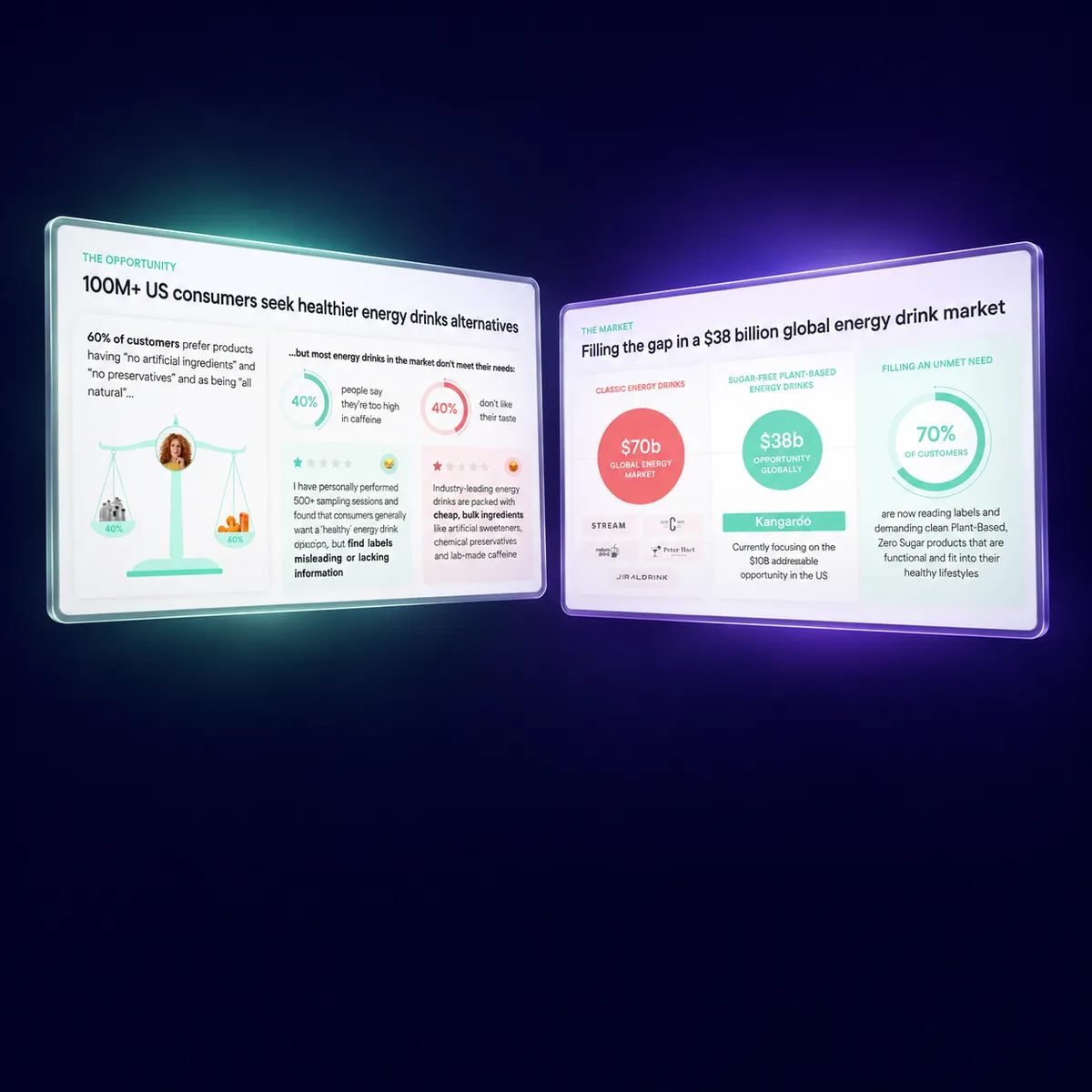
- Waveup prepares investor materials for consumer goods companies: $3B+ raised for 600+ startups since 2014
In short
What is consumer products startup funding?
Consumer products startup funding is what furniture, kitchenware, baby and toy brands raise to grow. It comes from angels, consumer VCs, lenders and, later, the bigger brands that buy them. The market is large: Americans spent $504.1 billion on furnishings and household durables in 2025. Investors still check landed cost and stock first.
- Who it's for
- Furniture, home, kitchen, baby and toy brands, pre-seed to Series D+
- What we build
- Investor deck, financial model, valuation, investor list, data room
- Prices
- Deck from $6,000, model from $3,000. Flat fees
- Track record
- $3B+ raised for 600+ startups since 2014
Market data checked on 6 November 2026. Sources are under each section.
Can a consumer products startup still raise money in 2026?
Yes, if your numbers show how stock turns back into cash. Families keep buying home goods and toys, but few venture funds back physical products.
The opportunity
Home and toy spending is growing again, and big groups buy young brands that prove demand.
- US toy sales grew again in 2025, led by games, puzzles and building sets
- After inflation, spending on home durables is above its 2021 peak
- Spin Master agreed in 2026 to buy the maker of Stickerbox, launched in late 2025
The problem
Crunchbase says the toy industry gets little venture money. The largest toy round it named in 2025 was a $7 million seed.
Market size
How much do Americans spend on home goods and toys?
Americans spent $504.1 billion on furnishings and durable household equipment in 2025, BEA data show. Four forces shape which brands grow:
- Toys: US toy sales grew 6% in 2025, Circana found, after two weak years
- Price tiers: toys priced $30 to $69.99 grew 18%, faster than any other band
- Volume: after inflation, US spending on home durables rose 2.2% in 2025
- Births: the US had 1% fewer babies in 2025, provisional CDC data show
Venture capital
Which consumer products still get venture money?
Crunchbase says the toy industry “doesn't receive much in the way of venture dollars”. The toy rounds it reported in 2025 were seed-sized, and most backed AI or connected toys.
times Stickerbox sold out after its late-2025 launch; Spin Master agreed to buy its maker in August 2026
median US seed round in Q1–Q3 2026, down from $3.4M in 2025
US venture deal value in Q1–Q3 2026, most of it for AI companies
Who invests in consumer products startups?
Consumer VCs, retail and commerce funds, consumer growth investors, toy groups that buy startups, and loans with a government guarantee. For more names, see our top 10 VCs investing in consumer products.
Investor database
Consumer goods investors in our database
The funds with the most consumer goods investments. Pick a stage, or open a fund for its cheque sizes.
Top 5 by consumer goods investments
Investments by industry
- Consumer Goods & Electronics26%
- Software & Apps14%
- Healthtech & Wellness14%
- Rounds
- Pre-seedSeed
- Average cheque
- Not listed
- Based in
- Palo Alto, United States
- Invests in
- USA
17 investments in total, 11 tagged Consumer Goods & Electronics.Open the full fund profile
Investments by industry
- Software & Apps15%
- Healthtech & Wellness11%
- Hardware. Robotics & IoT11%
- Consumer Goods & Electronics11%
- Rounds
- Pre-seedSeedSeries ASeries BSeries C+
- Average cheque
- $100K–$500K$500K–$1M$1M–$3M$3M–$10M
- Based in
- San Francisco, United States
- Invests in
- USA
813 investments in total, 11 tagged Consumer Goods & Electronics.Open the full fund profile
Investments by industry
- Fintech & Financial services38%
- Consumer Goods & Electronics21%
- Lifestyle10%
- Rounds
- SeedSeries A
- Average cheque
- $1M–$3M$3M–$10M
- Based in
- Chicago, United States
49 investments in total, 6 tagged Consumer Goods & Electronics.Open the full fund profile
Investments by industry
- E-commerce & Retail19%
- Food & Beverage15%
- Consumer Goods & Electronics12%
- Rounds
- SeedSeries ASeries B
- Average cheque
- $1M–$3M$3M–$10M
- Based in
- New York, USA
- Invests in
- USA, Europe
55 investments in total, 6 tagged Consumer Goods & Electronics.Open the full fund profile
Investments by industry
- Software & Apps30%
- Fintech & Financial services28%
- Consumer Goods & Electronics11%
- Rounds
- SeedSeries A
- Average cheque
- $1M–$3M$3M–$10M
- Based in
- Austin, United States
- Invests in
- USA
26 investments in total, 6 tagged Consumer Goods & Electronics.Open the full fund profile
From our investor database.
What do investors worry about in consumer products?
Our Fundraising 2025 study asked 56 VCs why they pass on a company. Revenue growth, unit economics, burn and missed milestones topped the list, ahead of defensibility and crowded categories. Physical products meet those tests in four ways.
Big purchases people can put off
After inflation, US spending on home durables fell 3.3% in 2022, after a record 2021. Buyers can wait a year for a new sofa or stroller.
What investors ask
- What happens to your sales and cash if buyers wait a year?
What your deck shows
- Sales and cash in a slow year, next to the base case
- The costs that fall when orders slow
Tariffs on imported goods
Since 14 October 2025, the US has charged 25% on many imported upholstered wooden products, kitchen cabinets and vanities. A December 2025 proclamation set higher rates from 1 January 2027.
What investors ask
- What does each product cost you landed, at today's duty and next year's?
What your deck shows
- Landed cost per product, by supplier country
- A plan to move or split production if duties rise
Safety tests before launch
Products for children aged 12 or under need a certificate based on tests at a CPSC-accepted lab. CPSC says that from 8 July 2026, importers of most regulated products must file certificates electronically.
What investors ask
- Which tests does each product need, and who pays for them?
What your deck shows
- Test costs and lab time in the launch plan
- Certificates ready before stock ships
Births that aren't growing
About 3.6 million babies were born in the US in 2025, provisional data show. Births fell from 2015 to 2020 and have hardly grown since.
What investors ask
- How do you grow when the number of new parents isn't growing?
What your deck shows
- Spend per family as children grow
- A second age group or country in the plan
How we help you raise
Flat fees agreed before we start. No success fee on advisory work.
Your product, margins and the range you'll sell next, in one story.
Landed cost, stock buys and cash, month by month.
A range set against recent sales of home, baby and toy brands.
Consumer VCs, angels, lenders and brand buyers that fit your stage.
Supplier contracts, test certificates and stock records, in order.
For a sale to a bigger home, baby or toy group.





Who we are
Waveup is a London-based fundraising and growth advisory, working in 60+ countries and 90+ industries. Since 2014 we have built the decks, models, CIMs and valuations behind $3B+ raised for 600+ startups.
About usConsumer products startup funding FAQ
How do consumer products startups get funding?
Do venture capitalists invest in consumer products?
What are consumer durables, and how do they differ from FMCG?
What do investors look for in a consumer products startup?
Should a home goods brand borrow for stock or raise equity?
How much does help with a consumer products raise cost?
Raising for a consumer products company?
Tell us what you make, where it's made and who buys it. We'll show you what investors and lenders will ask first.

