Industry: Biofuels
Biofuel investment
Biofuel plants are built with grants, project equity, debt and fuel-buyer contracts, while venture money backs the technology. We help you show each funder the numbers it checks.
- Investor decks and plant-level models for biofuel producers
- Funding plans that combine grants, equity, debt and offtake
- Waveup prepares investor materials for biofuel companies: $3B+ raised for 600+ startups since 2014
In short
What is biofuel investment?
Biofuel investment is money for the companies and plants that turn crops, waste oils and residues into fuel. Plants are usually funded with grants, project equity, debt and contracts with fuel buyers. Venture capital mostly backs new process technology. New investment in liquid biofuels peaked at $26.4B in 2007. Today's funders check feedstock, margins and buyers first.
- Who it's for
- Biofuel producers, project developers and fuel technology companies, pre-seed to Series D+
- What we build
- Investor deck, financial model, valuation, investor list, data room
- Prices
- Deck from $6,000, model from $3,000. Flat fees
- Track record
- $3B+ raised for 600+ startups since 2014
Market data checked on 5 November 2026. Sources are under each section.
Is the biofuel industry still worth investing in?
Yes, where a mandate or a signed buyer fixes demand. Margins still swing with feedstock prices and credit values, so investors back producers who control both.
The opportunity
Governments keep raising blending rules, and ships and planes need liquid fuels they can use now.
- Brazil, Indonesia and India lead demand growth to 2030
- EU targets for 2030 and higher US volumes for 2026 lift demand
- Forest residues and waste wood are opening up new feedstock
The problem
Several biodiesel, renewable diesel and SAF producers ran at tight or negative margins in 2025, the IEA found. In the US, eight biodiesel plants closed in 2024.
Market size
How big is the biofuel market, and who will need more fuel?
The world produced 1,422 terawatt-hours (TWh) of biofuels in 2025, about the same as in 2024. A decade earlier, output was 909 TWh. Four forces shape the years to 2030:
- Emerging markets: Brazil should supply 40% of new biofuel demand to 2030, the IEA forecasts
- US rules: the EPA set a 2026 requirement of 25.82 billion renewable fuel credits (RINs)
- Aviation: the IEA expects SAF output to reach 9 billion litres a year by 2030
- Shipping: the IEA expects ships to burn 1.6 billion litres of biodiesel in 2030
Venture capital
Who pays for biofuel plants and startups now?
New investment in liquid biofuels peaked at $26.4B in 2007, then fell for a decade. In 2026, the climate tech tracker CTVC still describes fuels as on pause.
drop in venture funding for low-carbon fuels in the first half of 2026, per CTVC
startup acquisitions by oil majors in 2025, across all of climate tech
committed to CIP's first advanced bioenergy fund, mostly for plants in Europe, at its 2023 close
Who invests in biofuel companies?
Early VCs fund the technology, while private equity, infrastructure funds and public grants pay for plants. One or two examples of each follow; for more energy investors, see our list of energy venture capital firms.
Investor database
Energy investors in our database
The funds with the most energy investments. Pick a stage, or open a fund for its cheque sizes.
Top 5 by energy investments
Investments by industry
- Energy & Utilities30%
- CleanTech & Sustainability16%
- Hardware. Robotics & IoT11%
- Rounds
- Pre-seedSeedSeries ASeries BSeries C+
- Average cheque
- $3M–$10M
- Based in
- New York, United States
- Invests in
- Europe, USA
151 investments in total, 35 tagged Energy & Utilities.Open the full fund profile
Investments by industry
- Energy & Utilities35%
- CleanTech & Sustainability16%
- Natural Resources8%
- Rounds
- SeedSeries ASeries BSeries C+
- Average cheque
- $100K–$500K$500K–$1M$1M–$3M$3M–$10M$10M–$50M
- Based in
- Paris, United States
- Invests in
- Europe, USA
213 investments in total, 33 tagged Energy & Utilities.Open the full fund profile
Investments by industry
- Energy & Utilities41%
- CleanTech & Sustainability12%
- Hardware. Robotics & IoT12%
- Rounds
- Pre-seedSeedSeries ASeries B
- Average cheque
- Not listed
- Based in
- Netherlands
- Invests in
- Europe
211 investments in total, 27 tagged Energy & Utilities.Open the full fund profile
Investments by industry
- Energy & Utilities45%
- Hardware. Robotics & IoT18%
- Transportation & Mobility8%
- Rounds
- SeedSeries ASeries BSeries C+
- Average cheque
- Not listed
- Based in
- United States
- Invests in
- Israel, Europe, USA +1
48 investments in total, 23 tagged Energy & Utilities.Open the full fund profile
Investments by industry
- Energy & Utilities22%
- CleanTech & Sustainability12%
- Hardware. Robotics & IoT10%
- Rounds
- Pre-seedSeedSeries ASeries B
- Average cheque
- $0–$100K$100K–$500K$500K–$1M$1M–$3M$3M–$10M
- Based in
- New York, United States
- Invests in
- USA
151 investments in total, 20 tagged Energy & Utilities.Open the full fund profile
From our investor database.
Why do biofuel companies find it hard to raise?
Our Fundraising 2025 study asked 56 VCs why they turn founders down. Revenue growth, unit economics, burn and missed milestones came first; defensibility and crowded categories followed. Biofuel producers also face four questions of their own.
Credit prices that swing
Credit values under the US Renewable Fuel Standard fell by more than half from 2023 into early 2025. By June 2026 they were close to record highs again.
What investors ask
- How thin does your margin get if credit prices fall back?
What your deck shows
- Profit per litre, with and without credits
- Feedstock costs and fuel prices you have locked in
Feedstock rules
From 2026, the US 45Z credit only pays for fuel made from feedstock sourced in the US, Mexico or Canada. The credit itself runs only to the end of 2029.
What investors ask
- How secure is your feedstock, and who competes for it?
What your deck shows
- Supply contracts by source, volume and price
- A business case that still works after 2029
Grants cover only part of a plant
Neste won a €28M EU Innovation Fund grant in the 2024 call for a biofuels unit in Finland. The project's financial close is due by the end of 2027.
What investors ask
- How is the rest of the plant financed, and by whom?
What your deck shows
- Sources and uses: grant, equity, debt and offtake
- Cost per litre at pilot, demo and commercial scale
Venture money on pause
Venture funding for low-carbon fuels fell 56% between January and June 2026. Oil majors bought no climate tech startups at all in 2025.
What investors ask
- What does this round buy you before the plant raise?
What your deck shows
- The milestone that unlocks project money
- Who could buy the company, or its fuel, later
How we help you raise
Flat fees agreed before we start. No success fee on advisory work.
Feedstock, conversion cost and buyers, told in the order funders check.
Margin per litre with and without credits, plant by plant.
A range that prices in credits, contracts and plant risk.
VCs, project funds, grant bodies and strategics that fit your stage.
Feedstock contracts, permits and certifications, filed for review.
For selling a plant, a stake or the whole company.
 $3Mseed round closed

Getting a deep tech company ready for a $3M seed round
Read the story $100M+nickel project investment case
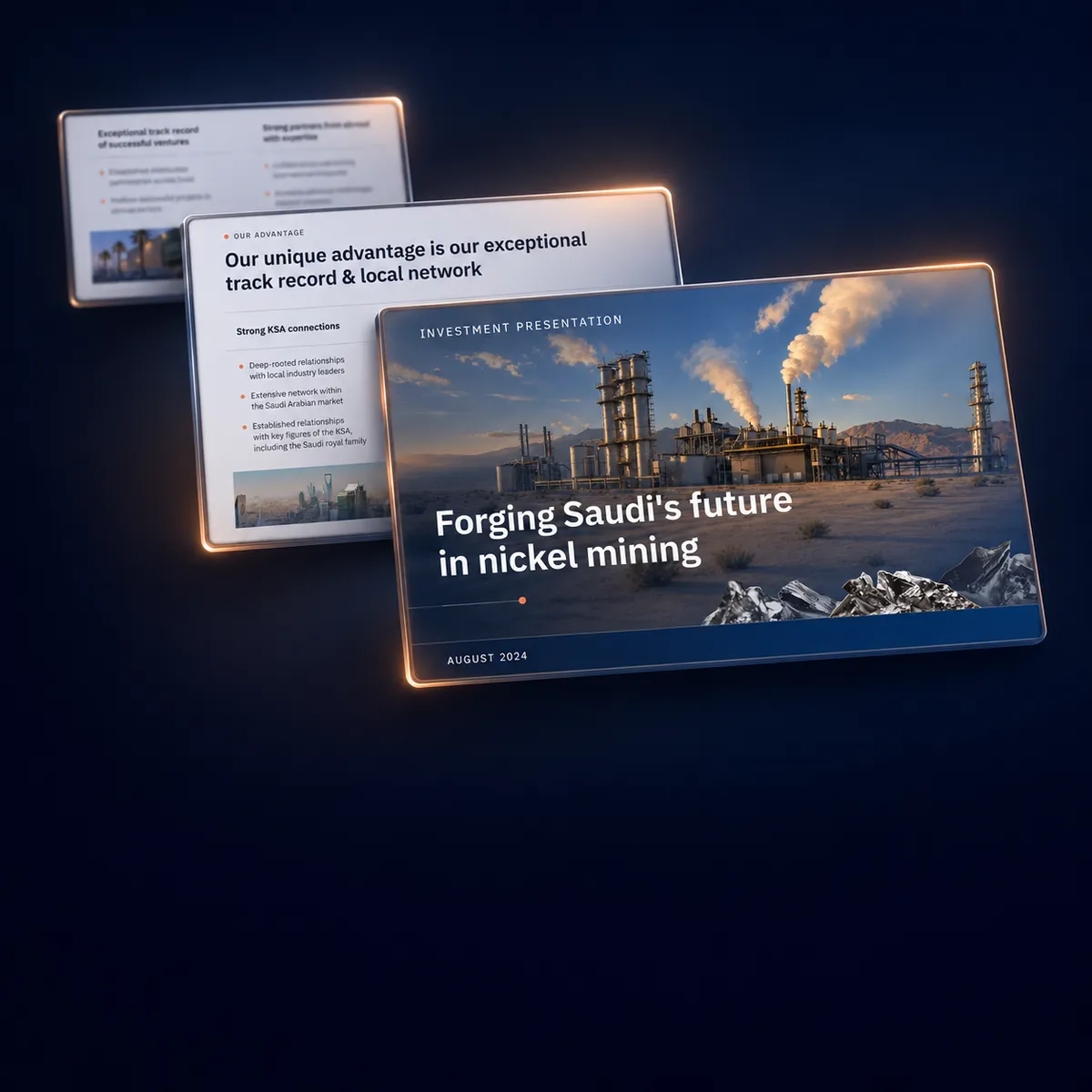
$100M+ nickel mining investment case: market analysis, financial model and deck
Read the story $75Mrevenue group, buyout financed
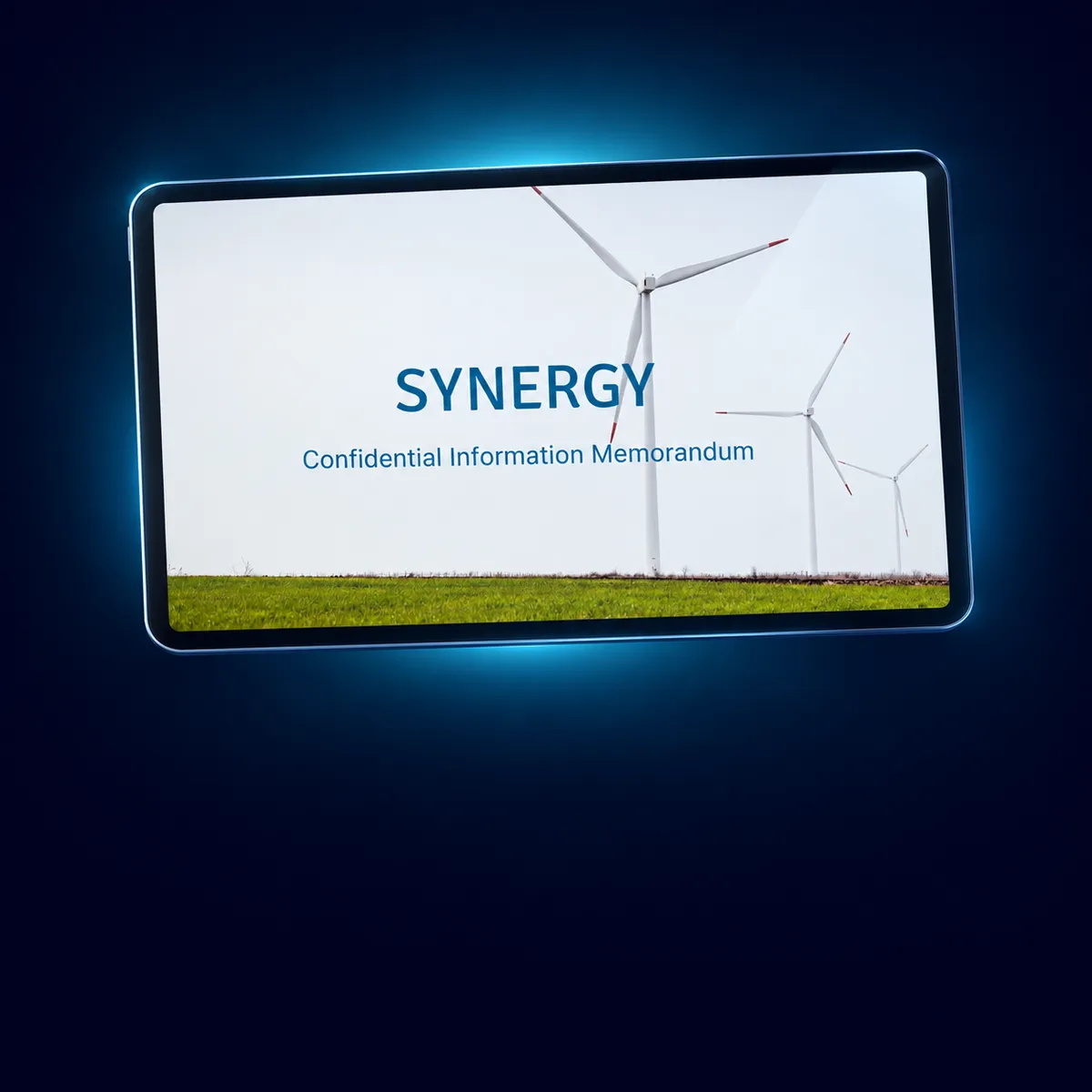
The CIM behind the buyout of a $75M-revenue utility and power group
Read the story $100Mraise at a $500M valuation

Getting an integrated energy platform ready for a $100M raise at a $500M valuation
Read the storyWho we are
Waveup is a London-based fundraising and growth advisory, working in 60+ countries and 90+ industries. Since 2014 we have built the decks, models, CIMs and valuations behind $3B+ raised for 600+ startups. Our work includes 54+ deep-tech projects across 10+ verticals.
About usBiofuel investment FAQ
How do biofuel companies get funding?
Is there a demand for biofuel?
How profitable is biofuel production?
What biofuels is the United States investing in?
How do sustainable aviation fuel producers raise money?
How much does help with a biofuel raise cost?
Raising for a biofuel company?
Tell us about your plant, your feedstock and your stage. We'll map which money fits each step.

