Industry: Defense tech
Defense tech startup funding
Armed forces now buy software, sensors and autonomy from young companies, and venture funds have followed. The hard step is from paid prototype to production order, and investors test it first.
- Past projects: a defense fund, anti-jamming communications, underwater security
- Decks and models built on contracts, test results and production costs
- Waveup prepares investor materials for defense tech companies: $3B+ raised for 600+ startups since 2014
In short
What is defense tech startup funding?
Defense tech startup funding is the money young companies building for armed forces and security agencies raise to grow. It blends government awards and prototype contracts with equity from specialist, strategic and NATO-backed investors. Crunchbase counted a record $9.6 billion of venture funding for defense startups in 2025.
- Who it's for
- Defense and dual-use startups in autonomy, AI software, sensing, communications, munitions and manufacturing, pre-seed to Series D+
- What we build
- Investor deck, financial model, valuation, investor list, data room
- Prices
- Deck from $6,000, model from $3,000. Flat fees
- Track record
- $3B+ raised for 600+ startups since 2014
Market data checked on 8 November 2026. Sources are under each section.
Why is venture capital moving into defense tech in 2026?
Budgets are rising fastest in Europe, and Pentagon buyers can now sign prototype deals within months. Most of the new venture money, though, lands with a few scaled companies.
The opportunity
Rearming allies want software, autonomy and new factories, and more of their buyers now deal with startups.
- European budgets grew faster in 2024 and 2025 than in any year since 2014
- Prototype deals with startups can close in two to three months
- Listings and trade sales reopened for defense companies in 2026
The problem
Most of the money goes to a few scaled companies. In Q2 2026, the 10 largest rounds took 62% of defense tech deal value.
Market size
How much are allies spending on defense, and why?
NATO allies expect to spend $1.81 trillion on core defense in 2026, at current prices. That is up from $1.48 trillion in 2024. Four forces drive the rise:
- A higher target: NATO allies pledged 5% of GDP for defense and security by 2035
- EU loans: the SAFE scheme lends member states up to €150B for defense purchases
- US spending: US core defense spending tops $1 trillion in 2026, NATO estimates
- Faster buying: DIU can sign prototype agreements in as few as 60 to 90 days
Venture capital
How fast is defense venture capital growing?
Defense startups raised more in the first five months of 2026 than in all of 2025, Crunchbase data show. Van Espahbodi of Generational Partners warns that the boom also draws "tourists and FOMO".
of defense tech VC in 2026 to the end of Q3, on PitchBook's count that includes dual-use firms
raised by defense-specific startups in Q3 2026, a quarterly record
defense tech public listings in 2026, 17 of them in Q2 and Q3
Who invests in defense tech startups?
Specialist defense VCs, a strategic investor, a NATO-backed fund and public programs that pay for prototypes and research. For more names, see our list of aerospace and space venture capital firms, which includes defense-focused funds.
Investor database
Aerospace and hardware investors in our database
The funds with the most hardware investments. Pick a stage, or open a fund for its cheque sizes.
Top 5 by hardware investments
Investments by industry
- Hardware. Robotics & IoT26%
- Transportation & Mobility14%
- Software & Apps12%
- Rounds
- SeedSeries ASeries BSeries C+
- Average cheque
- $100K–$500K$500K–$1M$1M–$3M$3M–$10M
- Based in
- Menlo Park, United States
- Invests in
- USA
93 investments in total, 20 tagged Hardware. Robotics & IoT.Open the full fund profile
Investments by industry
- Hardware. Robotics & IoT27%
- Software & Apps15%
- Transportation & Mobility10%
- Rounds
- Pre-seedSeedSeries A
- Average cheque
- $100K–$500K
- Based in
- Austin, United States
- Invests in
- South Asia, USA
26 investments in total, 16 tagged Hardware. Robotics & IoT.Open the full fund profile
Investments by industry
- Transportation & Mobility24%
- Hardware. Robotics & IoT13%
- Space economy11%
- Rounds
- Pre-seedSeedSeries ASeries BSeries C+
- Average cheque
- $100K–$500K$500K–$1M$1M–$3M$3M–$10M$10M–$50M
- Based in
- London, United Kingdom
- Invests in
- Israel, Europe, USA
143 investments in total, 11 tagged Hardware. Robotics & IoT.Open the full fund profile
Investments by industry
- Hardware. Robotics & IoT21%
- Software & Apps13%
- Transportation & Mobility13%
- Rounds
- Pre-seedSeedSeries ASeries BSeries C+
- Average cheque
- $0–$100K$100K–$500K$500K–$1M$1M–$3M$3M–$10M
- Based in
- Los Angeles, United States
- Invests in
- USA
35 investments in total, 10 tagged Hardware. Robotics & IoT.Open the full fund profile
Investments by industry
- Transportation & Mobility31%
- Hardware. Robotics & IoT17%
- Space economy14%
- Rounds
- SeedSeries ASeries BSeries C+
- Average cheque
- Not listed
- Based in
- San Francisco, United States
- Invests in
- USA
11 investments in total, 6 tagged Hardware. Robotics & IoT.Open the full fund profile
From our investor database.
Why do investors turn down defense tech startups?
Our Fundraising 2025 study of 56 VCs found four top reasons to say no: burn, missed milestones, revenue growth and unit economics. In defense, a late first order can trigger all four.
From prototype to production order
Many startups win a first award, then stall before a program pays for production. Over a decade, only 16% of DoD SBIR-funded companies won Phase III contracts.
What investors ask
- Who pays for production, and from which budget?
What your deck shows
- Named buyers and the budget behind each one
- A dated plan from prototype to production order
Fewer seed checks
Late rounds keep growing while early money thins. Pre-seed and seed deals fell to 41 in Q3 2026, the fewest in any quarter since 2016.
What investors ask
- Will this round carry you to a paid pilot?
What your deck shows
- Grants and prototype awards stacked beside the equity
- Milestones you will hit before the next raise
Rules on parts, exports and owners
EU-funded SAFE purchases need at least 65% of component costs from the EU, Ukraine or EEA/EFTA countries. In the US, anyone who makes or exports defense articles must register under ITAR.
What investors ask
- Which export and sourcing rules apply to your product?
What your deck shows
- Where each key component comes from
- Export classification and investor checks done with counsel
Security approvals take time
Military software often needs cleared staff, classified space and a cyber authorization to operate. DIU's Bridge Program, set up in August 2026, aims to cut authorization timelines by half.
What investors ask
- How long until your product is cleared to run on military networks?
What your deck shows
- A dated path to security approval
- Cleared people and facilities in the hiring plan
How we help you raise
Flat fees agreed before we start. No success fee on advisory work.
Your mission, first buyer and path to production in one story.
Contract timing, unit costs and the cash gap before production orders.
Pricing set against recent defense rounds and listed contractors.
Defense VCs, strategic funds and government programs that fit your stage.
Test reports, contracts and export paperwork, organized for investor review.
For a sale to a prime contractor or a larger defense group.
 $5Mseed closed, Series A raising
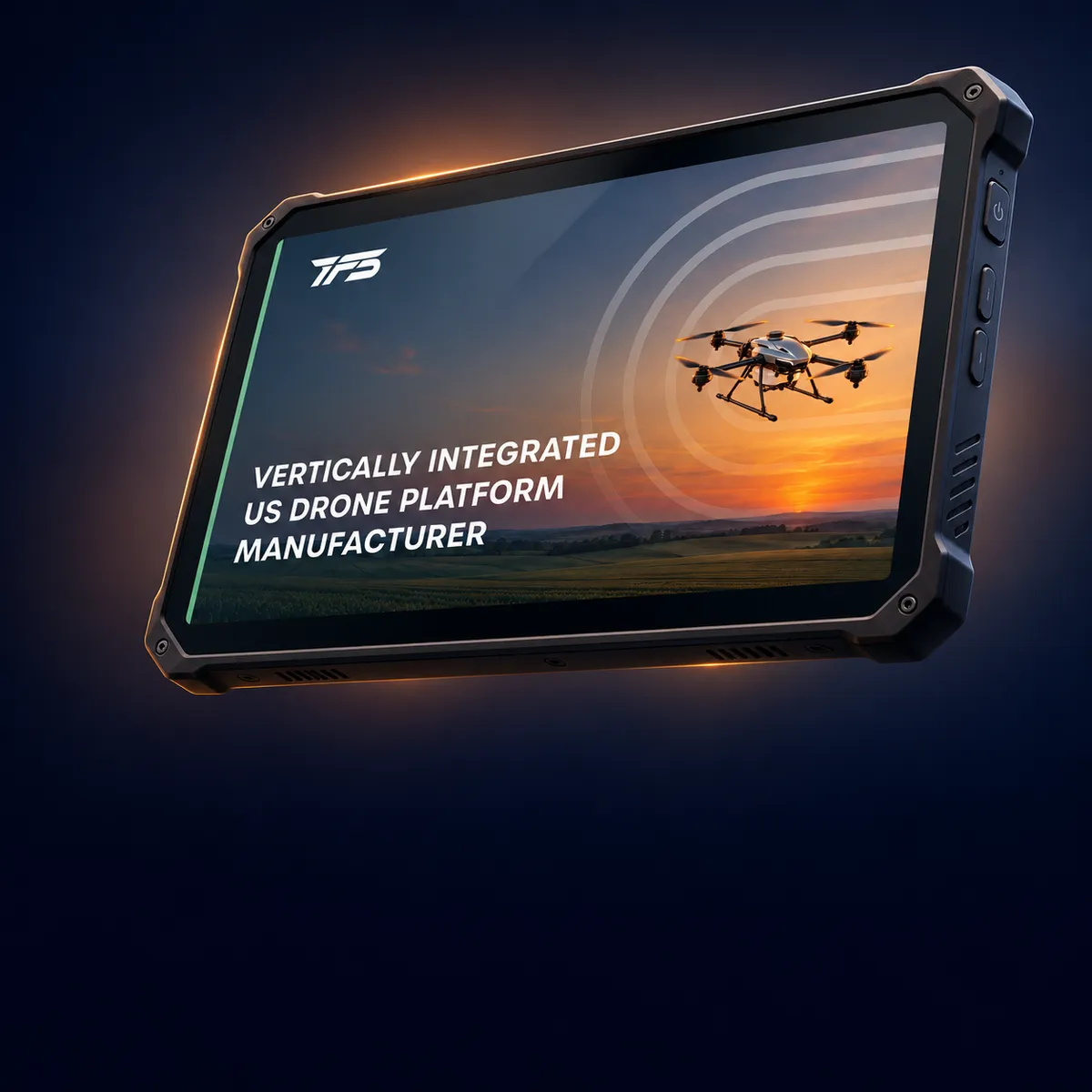
Getting a US drone manufacturer through a $5M seed and into its Series A
Read the story $3Mseed round closed

Getting a deep tech company ready for a $3M seed round
Read the story $100Mdebt facility

From a $5M seed to a $100M debt facility for a sovereign AI company
Read the storyWho we are
Waveup is a London-based fundraising and growth advisory, working in 60+ countries and 90+ industries. Since 2014 we have built the decks, models, CIMs and valuations behind $3B+ raised for 600+ startups.
About usDefense tech startup funding FAQ
How do defense tech startups get funding?
Is defense tech startup funding still growing in 2026?
What is dual-use technology, and why do investors want it?
Which investors back early-stage defense tech startups?
How do you start a defense company?
How much does help with a defense tech raise cost?
Raising for a defense tech company?
Share your first buyer, your test results and the round you plan. We'll mark the gaps a defense investor would spot.

